Wise From Above

“Who is wise and understanding among you? By his good conduct let him show his works in the meekness of wisdom. But if you have bitter jealousy and selfish ambition in your hearts, do not boast and be false to the truth. This is not the wisdom that comes down from above, but is earthly, unspiritual, demonic. For where jealousy and selfish ambition exist, there will be disorder and every vile practice. But the wisdom from above is first pure, then peaceable, gentle, open to reason, full of mercy and good fruits, impartial and sincere. And a harvest of righteousness is sown in peace by those who make peace.” James 3:13-18

“Get wisdom; get insight;
    do not forget, and do not turn away from the words of my mouth.
Do not forsake her, and she will keep you;
    love her, and she will guard you.
The beginning of wisdom is this: Get wisdom,
    and whatever you get, get insight.” Proverbs 4:5-7

Most would not say that jealousy or conceit in itself describes wisdom, yet much of what is promoted or passed as worldly wisdom today finds its roots there. Inflated view of self begets rants, opinions, and pronouncements that are a far cry from godly wisdom. Thinking from this dark earth has little resemblance to wisdom from heaven.

For the Christian, wisdom from above is just that: it has its foundation on a different and higher plane than what is puffed and strutted out by the world. As God’s thoughts and ways are far above ours, so His wisdom both comes from, and resides in, the heavenlies where He reigns in righteous splendor. (Isaiah 55:8-9)

How do we attain it? We must train ourselves to seek God’s wisdom in the recesses of His word through regular, focused reading. In earnest, adoring, surrendered prayer, ask for it, with genuine desire and willingness to procure. Then cultivate it by guarding purity of thought and practice. Exercise gentleness as a fruit of the Spirit, and be open to reason, approaching discussions with civility and Bible study with a teachable mind. Practice mercy, generosity, and compassion, looking upon and loving others as Christ does. Implementing what we know forges truth, understanding, and wise ways deep into our habits. (Psalm 119:9; Luke 6:38; Galatians 5:22-23; James 1:5; 1 John 3:2-3)

The Lord makes available His word and Spirit, but we must search as for treasure and yield wholly to their fill. We have not because we ask not, and apply not. Godly wisdom stands out in our day, and may not be popular, but its benefits are innumerable and protections broad. (Proverbs 2:1-15; Ephesians 5:18b; James 4:2b)

What steps will we take to put away vile practices forever, and replace earthly and unspiritual influences with those from above? How will we cultivate a scriptural mindset? Do we value godly wisdom enough to make necessary changes to attain it?

“Speak, O Lord, as we come to You
To receive the food of your holy word.
Take Your truth, plant it deep in us;
Shape and fashion us in Your likeness…
Cause our faith to rise
Cause our eyes to see,
Your majestic love and authority.
Words of power that can never fail;
Let their truth prevail over unbelief.” ~Keith Getty and Stuart Townend (2018)

Good Father, may I daily seek and practice Your wisdom from above, and so make a heavenly difference here below.


Lift, Bless, Lift, Repeat

“And he lifted up his eyes on his disciples, and said:

‘Blessed are you who are poor, for yours is the kingdom of God.

‘Blessed are you who are hungry now, for you shall be satisfied.

‘Blessed are you who weep now, for you shall laugh.

‘Blessed are you when people hate you and when they exclude you and revile you and spurn your name as evil, on account of the Son of Man!  Rejoice in that day, and leap for joy, for behold, your reward is great in heaven; for so their fathers did to the prophets.'” Luke 6:20-23

Jesus spent his days with individuals and crowds, teaching and healing and taking advantage of every moment of public ministry to display the works of God. But His special attention was to His chosen twelve, and removing Himself from the crowds, He lifted his eyes on them and blessed them. It started with a knowing look, seeing them inside and knowing their thoughts and needs, then looking to heaven from where all blessings flow. The beatitudes He then pronounced in turn lifted His beloved disciples from pressing concerns to heavenly joys in a buoyancy of benevolent care and favor.

We have opportunity everyday to see those God has put around us, or to turn a blind eye. God in His providence has particularly assigned individuals to our sphere in the world, and enlists us to make a difference as His servants. Their burdens of heart and reality are heavy, and not so unlike ours. If they know not Christ, the cloud of present ills may be suffocating, and the despair of a dark or uncertain future unbearable. They are ripe for a look of love, and a look above. The compassion we offer and the words we speak may be the only refreshment they receive. We never know how God will use His truth to plant seeds of hope, or to penetrating fears and doubts with light, but we can trust it will not return void. (Isaiah 49:1-3; 55:10-11)

What do we actually know about the people with whom we work, or among whom we live? Do we take the time and attention to stop, look them in the eye, ask questions in love and interest? Have we let assumptions build walls between us? Do we retreat from differing views to our safe comfy places, or are we prepared and willing to connect with their experience and relate to their souls? How could we, this day, look into, then up, to give out a blessing to people we know? (Romans 12:9-16)

“Out in the highways and byways of life,
Many are weary and sad;
Carry the sunshine where darkness is rife,
Making the sorrowing glad.

Tell the sweet story of Christ and his love,
Tell of his pow’r to forgive;
Others will trust him if only you prove
True, ev’ry moment you live.

Give as ’twas given to you in your need,
Love as the Master loved you;
Be to the helpless a helper indeed,
Unto your mission be true.

Make me a blessing, Make me a blessing.
Out of my life may Jesus shine;
Make me a blessing, O Savior, I pray.
Make me a blessing to someone today.” ~Ira B. Wilson (1909)

Lord, keep my eyes and hands lifted to bless others in Your name.

Put Your Name Upon Me!

“The Lord spoke to Moses, saying,  ‘Speak to Aaron and his sons, saying, Thus you shall bless the people of Israel: you shall say to them,

“The Lord bless you and keep you;
the Lord make his face to shine upon you and be gracious to you;
the Lord lift up his countenance upon you and give you peace.

“So shall they put my name upon the people of Israel, and I will bless them.” Numbers 6:22-27

“There are many who say, ‘Who will show us some good?
    Lift up the light of your face upon us, O Lord!’” Psalm 4:6

“Make your face shine on your servant;
    save me in your steadfast love
and teach me your statutes!” Psalm 31:16; 119:135

“May God be gracious to us and bless us
    and make his face to shine upon us.” Psalm 67:1
    

There’s a washing, a unique beauty, and a holy power in being adorned with the Lord’s name. There is both privilege and responsibility in bearing and wearing it. His name identifies us as those smiled upon by heaven, those marked with His favor and grace, those who are His people. It wields comfort and security, confidence and bravery. Indeed, it is a blessing in every way, marking us forever and equipping us for every day.

But there are times we do not wear it well, doing great dishonor to the Name by our language, lack of self-control, foolish antics or choices. There are times we are ashamed, and would rather hide behind a prescribed mask of fancy or famous, or a chameleon form of chosen identity to fit in with a crowd. There are times we want to shake it off and be unencumbered by the Family name, its weight of notice and accountability, and sometimes criticism and persecution. Being known as royalty brings vulnerability, and piercing scrutiny.

But when we take regular time to soak in the Lord’s Name, we behold and understand more and more of His character; it shines on and into us. We grow in our love for this gracious One, and of His favor. We learn to relish the warmth, and savor the smile of God’s guarding our hearts and crowning our days with His bounty so much we want more, and want it always. (Psalm 65:11)

Would we begin each day by bowing before the King, asking that He crown us with His countenance? Would we take up His statutes along our way, and employ His grace and steadfast love in industry and interactions? What is seen and learned through us of His demeanor? How does our behavior display and attract others to His light?

“O for a heart to praise my God,
a heart from sin set free;
a heart that’s sprinkled with the blood
so freely shed for me:

A heart resigned, submissive, meek,
my great Redeemer’s throne;
where only Christ is heard to speak,
where Jesus reigns alone
.

A heart in every thought renewed,
and full of love divine;
perfect and right and pure and good —
a copy, Lord, of thine.

Thy nature, gracious Lord, impart,
come quickly from above;
write thy new name upon my heart,
thy new best name of Love.” ~Charles Wesley (1742)

Father God, may Your name be seen on me and praised on high.

Beware the Enticement of Earthly Honor

“Balak, king of Moab, sent messengers to summon Balaam son of Beor… Balak said: ‘A people has come out of Egypt; they cover the face of the land and have settled next to me. Come and put a curse on these people, because they are too powerful for me. Perhaps then I will be able to defeat them and drive them out of the land. For I know that whoever you bless is blessed, and whoever you curse is cursed.’

“When they came to Balaam, they told him what Balak had said… But God said to Balaam, ‘Do not go with them. You must not put a curse on those people, because they are blessed.’

“The next morning Balaam got up and said to Balak’s officials, ‘Go back to your own country, for the Lord has refused to let me go with you…’ Then Balak sent other officials, more numerous and more distinguished than the first,.. to Balaam and said:

“’This is what Balak says: Do not let anything keep you from coming to me, because I will reward you handsomely and do whatever you say. Come and put a curse on these people for me.’

“But Balaam answered, ‘Even if Balak gave me all the silver and gold in his palace, I could not do anything great or small to go beyond the command of the Lord my God. Now spend the night here so that I can find out what else the Lord will tell me…’

“God was very angry when he went, and the angel of the Lord stood in the road to oppose him.” Numbers 22:4b-6,7b,12-13,15-19,22a

Balaam was a foot-dragger, seemingly intent on obedience, but waffling to keep his options open for worldly esteem. His no was never NO, his maybe caught between present pomp and invisible blessing. God finally tested his mettle by permitting him to go to Balak. Half-heartedness morphed into foolishness before finally being humbled into allegiance. After wobbling the option scales weighing both sides of words, he pronounced seven oracles just as God directed. (Numbers 22:20-38; 23-24)

How often and easily we settle for the seen over the unseen, for temporal pleasure over eternal joy, for tangible and sight over faith. When we are transfixed on gaining from the world— attention, applause, or material reward— we fall into all sorts of foolishness. We puff with pride, crave and quarrel, and upend all sorts of passions that are meant to beat skyward. Only God can transform us, and set aright our craving and compass. (2 Corinthians 5:7; James 4:1-4,6-8,10)

Where does our obedience flag, and why? Is the honor of man, who is fleeting, really better than everlasting favor in God’s presence? Do we value earthly accolades over God’s ‘well done’? When God gives us opportunity to choose His ways over the world’s, do we waffle or wait? When we fail, would we confess our perverse affections and transplant them into God’s heart for us? The Lord, by His grace, sanctifies and reorients our desires. He alone is our lasting glory. (Psalm 16:11; 62:7; Matthew 25:23; 2 Corinthians 3:18; 4:6,18; Hebrews 11:1, 24-27)

Good Father, turn my heart from vanity and fleeting pleasure to whole obedience and desire for Your honor alone. May my every impulse, decision, and action be to that end, for You are worthy. (Psalm 60:11-12)

Love’s Divine Expungement

“Love is patient, love is kind. It does not envy, it does not boast, it is not proud. It does not dishonor others, it is not self-seeking, it is not easily angered, it keeps no record of wrongs. Love does not delight in evil but rejoices with the truth.  It always protects, always trusts, always hopes, always perseveres.” 1 Corinthians 13:4-7

“Cleanse me with hyssop, and I will be clean;
    wash me, and I will be whiter than snow.” Psalm 51:7

“‘Come now, let us settle the matter,’
    says the Lord.
‘Though your sins are like scarlet,
    they shall be as white as snow;
though they are red as crimson,
    they shall be like wool.'” Isaiah 1:18

“You will again have compassion on us;
    you will tread our sins underfoot
    and hurl all our iniquities into the depths of the sea.” Micah 7:19

Expunge: To destroy; blot out; obliterate; erase; strike out wholly; to cancel out or destroy completely; to eliminate from one’s consciousness. In law, an expungement order directs the court to treat the criminal conviction as if it had never occurred, essentially removing it from a defendant’s record.

In perfect, kind, selfless love, one keeps no record of wrongs. The other’s deserved penalty has been paid in full with mercy, so it is put away forever. No owing, no recounting, no record. Jesus loves this way to this end, and so are we are to love one another. As He has graciously done away with our sin against Him, we are in turn to expunge all infractions against us. Not repeat them, resurface them, or return them to the ring for a fight. Ever. (John 13:34; 1 Peter 2:24)

Keeping no record of wrongs closes the door on resentment with love upon love. It seals off forever every offense, with a freedom and joy that says, ‘no more. You will not have a hold or effect on me.’ It turns greed into generosity, the tendency to nurse a wound to healing it, and bitterness and competition into protecting, trusting, and persevering.

As for accounts, records may vary. For our good, we must keep them short, daily bringing the tally to zero. Some wrongs may be confessed, to which we kindly extend forgiveness and repair. Others, perhaps never acknowledged or confessed, are expunged when we pray, with humility and genuine compassion, “Father, forgive them for they know not what they do.” It’s not up to us to convict or correct- the Holy Spirit is better at those anyway. But it is our responsibility, and is doable by God’s grace, to forgive, and release. (Luke 23:34; Ephesians 4:26-27)

What sins are we holding against others? Would we, with an act of will, forgive, and put them to rest, forever? We may not forget, and still and forever bear scars, but the record keeping- the pulling out the list to recount and recite- must not be. In holding onto wrongs done us, we’re the ones shackled. What and whom the Lord has set free is free indeed, and the chains He broke at Calvary fall from us as we relinquish our list. (John 8:36; Ephesians 4:32)

Gracious Lord, in gratitude for the Cross and Your divine forgiveness, help me expunge every record of wrongs done me. May I love others as You love, so You are exalted and known.

The Assembly of the Righteous

“There was no water for the congregation. They assembled themselves together against Moses and Aaron. The people quarreled with Moses, ‘Would that we had perished when our brothers perished before the Lord! Why have you brought the assembly of the Lord into this wilderness, that we should die..? Why have you made us come up out of Egypt to bring us to this evil place? It is no place for grain or figs or vines or pomegranates, and there is no water to drink.’ Then Moses and Aaron went from the presence of the assembly… and fell on their faces. And the glory of the Lord appeared..” Numbers 20:2-6

“Blessed is the man
    who walks not in the counsel of the wicked,
nor stands in the way of sinners,
    nor sits in the seat of scoffers;
but his delight is in the law of the Lord,
    and on his law he meditates day and night…

The wicked will not stand in the judgment,
    nor sinners in the assembly of the righteous.” Psalm 1:1-2,5

“If two of you agree on earth about anything they ask, it will be done for them by my Father in heaven. For where two or three are gathered in my name, there am I among them.” Matthew 18:20

“They went up to the upper room,.. Peter and John and James and Andrew, Philip and Thomas, Bartholomew and Matthew, James the son of Alphaeus and Simon the Zealot and Judas the son of James. All these with one accord were devoting themselves to prayer, together with the women and Mary the mother of Jesus, and his brothers.” Acts 1:13-14

“They devoted themselves to… teaching,.. fellowship,.. and prayers… Day by day, attending the temple together and breaking bread in their homes, they received their food with glad and generous hearts, praising God and having favor with all the people.” Acts 2:42,46-47

“He went to the house of Mary,.. where many were gathered together and were praying.” Acts 12:12

In cultures where individualism reigns supreme, and societies where distance and isolation has been the norm, people still have an innate need to belong. The mantra of ‘community’ may have been disrupted of late, but it thrums on in incessant rhythm in the hearts of man. Groups assemble magnetically in common fandom, protests, fellowship, and movements. Some prowl and howl their rancor, some cheer a team or cause, and others worship in holy unison. (Psalm 34:3; 59:6-7)

What motivates us to assemble together? Are we driven by compulsion to talk, gather scurulous information, and gossip, or to build others up, share what God has done, sing His praises together, and pray in mutual support and supplication? How can Christ be central? Pray ahead of meeting to have open ears, eyes, and hearts, to specifically bless and give grace those in need, for God to superintend every interaction and season our conversations with salt. (Ephesians 4:29; Colossians 4:6; 1 Thessalonians 5:11,14-19)

Maybe we are those who prefer to be alone and quiet, and are drained by groups with too much frenetic input and discussion. In this case, we are still called to gather together, and can prepare with similar prayer. The Lord blesses our obedience by using us to build up others and building us up at the same time. (Hebrews 10:24-25)

Father, guide me to do my part in assembling with the righteous, contributing to the growth of Your Body and the praise of Your glory. (Colossians 3:12-16)

Refuse Shiloah? Suffer the Raging River

“The Lord spoke to me again: ‘Because this people has refused the waters of Shiloah that flow gently, and rejoice over Rezin and the son of Remaliah, therefore, behold, the Lord is bringing up against them the waters of the River, mighty and many, the king of Assyria and all his glory. And it will rise over all its channels and go over all its banks, and it will sweep on into Judah, it will overflow and pass on, reaching even to the neck, and its outspread wings will fill the breadth of your land…’

“For the Lord spoke thus to me with his strong hand upon me, and warned me not to walk in the way of this people, saying: ‘Do not call conspiracy all that this people calls conspiracy, and do not fear what they fear, nor be in dread. But the Lord of hosts, him you shall honor as holy. Let him be your fear, and let him be your dread. And he will become a sanctuary…'” Isaiah 8:5-8,11-14a

“My people have committed two evils:
they have forsaken me,
    the fountain of living waters,
and hewed out cisterns for themselves,
    broken cisterns that can hold no water.” Jeremiah 2:13

“Jesus stood up and cried out, ‘If anyone thirsts, let him come to me and drink…’ [Jesus] said to him, ‘Go, wash in the pool of Siloam.’ So he went and washed and came back seeing.” John 7:37; 9:7

“See that you do not refuse him who is speaking. For if they did not escape when they refused him who warned them on earth, much less will we escape if we reject him who warns from heaven.” Hebrews 12:25

Prophets and apostles speak a consistent message with Jesus: refuse Him, or suffer the consequences. Throughout the Scriptures and for millennia through history, God’s people have rebelled, inviting and incurring His promised wrath. His holiness requires that we meet Him at mercy, yet time and again, we refuse His appointed healing, living waters in order to make our own way. And that way will never succeed. We cannot clean ourselves nor earn God’s favor. Every effort at ‘rejoicing over Rezin’ with desperation or alien affection, and hewing our own cisterns, will lead us only to the blast and pound of Justice’s raging river.

The glorious truth is that Jesus endured our deserved and horrid judgment, and His nail-scarred hands hold out Shiloah’s gentle cleansing waters today. He is merciful and mighty to save. Although we suffer the effects of God’s present wrath in the world, we can choose by His grace to submerse ourselves in the flow of His grace that both cleanses and renews. (Zephaniah 3:17; Romans 1:18-21; 8:18-24; Titus 3:4-7)

The Lord will make His way and have His way no matter what. Wouldn’t we rather the mode of Shiloh’s gentle waters by yielding to God’s early and gracious discipline, than harsher methods to get our attention? What’s causing stubbornness to insist on our own devices, strategies, and escapes? Any bent of the flesh can be washed and regenerated by His life-giving waters! Would we genuinely repent and fully receive His cleansing, and return regularly for times of refreshing? (Psalm 32:1-7; Acts 3:19-20; Romans 2:3-5)

Lord, may I fear and honor You as holy, and daily come under Your measureless flow of mercy and grace. So cleanse and fill me that I never thirst for any water but You.

Love: Irresistible Begets Irretractible

He

“Behold, you are beautiful, my love;
    behold, you are beautiful;
    your eyes are doves.
..

“As a lily among brambles,
    so is my love among the young women.

She

“As an apple tree among the trees of the forest,
    so is my beloved among the young men.
With great delight I sat in his shadow,
    and his fruit was sweet to my taste.
He brought me to the banqueting house,
    and his banner over me was love…
I adjure you, O daughters of Jerusalem,
    by the gazelles or the does of the field,
that you not stir up or awaken love
    until it pleases.

“The voice of my beloved!
    Behold, he comes,
leaping over the mountains,
    bounding over the hills.
My beloved is like a gazelle
    or a young stag.
Behold, there he stands
    behind our wall,
gazing through the windows,
    looking through the lattice.
My beloved speaks and says to me:
‘Arise, my love, my beautiful one,
    and come away,
for behold, the winter is past;
    the rain is over and gone.
The flowers appear on the earth,
    the time of singing has come,
and the voice of the turtledove
    is heard in our land.
The fig tree ripens its figs,
    and the vines are in blossom;
    they give forth fragrance.
Arise, my love, my beautiful one,
    and come away.
O my dove, in the clefts of the rock,
    in the crannies of the cliff,
let me see your face,
    let me hear your voice,
for your voice is sweet,
    and your face is lovely.
Catch the foxes for us,
    the little foxes
that spoil the vineyards,
    for our vineyards are in blossom.’

“My beloved is mine, and I am his.” Song of Songs 1:15; 2:2-4,7-16a

There is a power in pursuing love that cannot be denied, or resisted. When it once sets affection, captivation becomes consuming passion that is never fully quenched. The ongoing nature of love is inexplicable satisfaction that is never satisfied, because it is infinite and eternal. We cannot help but love in return.

Such is Christ’s love that both constrains and frees us. It meets and satiates our deepest longings, and compels us to want more of Him. It arrests our senses with delight and fills our world with beauty, dimension, color, and fragrance, and loosens our lips to sing. It settles us under its banner of blessing and favor, and sets us to run in joy, and free. It seats us at its banquet table and nourishes with richest fare, and sends us to feed others. It holds us fast and stirs us to embrace others in its life-giving warmth. (Psalm 23:1-3,5; 2 Corinthians 5:14-19)

How lavishly do we return our Savior’s love? And how are we loving others in His name and character?

“O Love that will not let me go,
I rest my weary soul in Thee;
I give Thee back the life I owe,
That in Thine ocean depths its flow
May richer, fuller be.

O Light that follow’st all my way,
I yield my flick’ring torch to Thee;
My heart restores its borrowed ray,
That in Thy sunshine’s blaze its day
May brighter, fairer be.” ~George Matheson (1882)

Gracious Lord who infinitely loves me, perfect my love for You and for those around me, that they are drawn to love Thee too.

Finished Precipitates Ongoing

“For since the law has but a shadow of the good things to come instead of the true form of these realities, it can never, by the same sacrifices that are continually offered every year, make perfect those who draw near. Otherwise, would they not have ceased to be offered, since the worshipers, having once been cleansed, would no longer have any consciousness of sins? But in these sacrifices there is a reminder of sins every year. For it is impossible for the blood of bulls and goats to take away sins…

“When [Christ] said, ‘You have neither desired nor taken pleasure in sacrifices and offerings and burnt offerings and sin offerings’ (these are offered according to the law), then he added, ‘Behold, I have come to do your will.’ He does away with the first in order to establish the second. And by that will we have been sanctified through the offering of the body of Jesus Christ once for all.

“And every priest stands daily at his service, offering repeatedly the same sacrifices, which can never take away sins. But when Christ had offered for all time a single sacrifice for sins, he sat down at the right hand of God, waiting from that time until his enemies should be made a footstool for his feet. For by a single offering he has perfected for all time those who are being sanctified.

“Therefore, brothers, since we have confidence to enter the holy places by the blood of Jesus, by the new and living way that he opened for us through the curtain, that is, through his flesh, and since we have a great priest over the house of God, let us draw near with a true heart in full assurance of faith, with our hearts sprinkled clean from an evil conscience and our bodies washed with pure water. Let us hold fast the confession of our hope without wavering, for he who promised is faithful.” Hebrews 10:1-4,8-14,19-23

It seems inconsistent that a work can be coincidentally completed and ongoing, but in God’s economy, His word is yes and amen. The fact that Jesus has finished with our sin penalty once for all is the very foundation for our ongoing sanctification. It elucidates the joy before us and is the power that motivates us to persevere. When we know the war was finished at Calvary, the ultimate victory won, we can confidently follow our Captain and sing as victors in fiery battle. When we know He understands every strategy against us, and that we go not forth alone against the daily foe, we can boldly take the next step into the unseen. When dissension rages, doubts erupt, and the world quakes, we can stand fast because He’s our present help and shield. His once and forever is the foundation of our ongoing. (Psalm 18:1-3; 46:1-3; 2 Corinthians 1:20)

Oh Christian, why do we faint when the going is tough? Let us not lose heart, but hold fast our hope! We have been sanctified, and are being sanctified! Jesus has seized the joy before Him and holds it for us! He has lifted our burden, we can run unfettered! He has finished, we can persevere! He is faithful, we need not fear! He upholds us, we cannot fall! (Psalm 55:22; 68:19; John 19:30; 1 Thessalonians 5:24; Hebrews 12:1-2)

Father, when the daily is fraught with trial, keep my eyes on the prize. Finish in me what You have finished in heaven, to Your glory. (Philippians 3:14)

Whining Sweet Grapes Sour with ‘However’ and ‘Besides’

“The Lord spoke to Moses, saying, ‘Send men to spy out the land of Canaan, which I am giving to the people of Israel…’

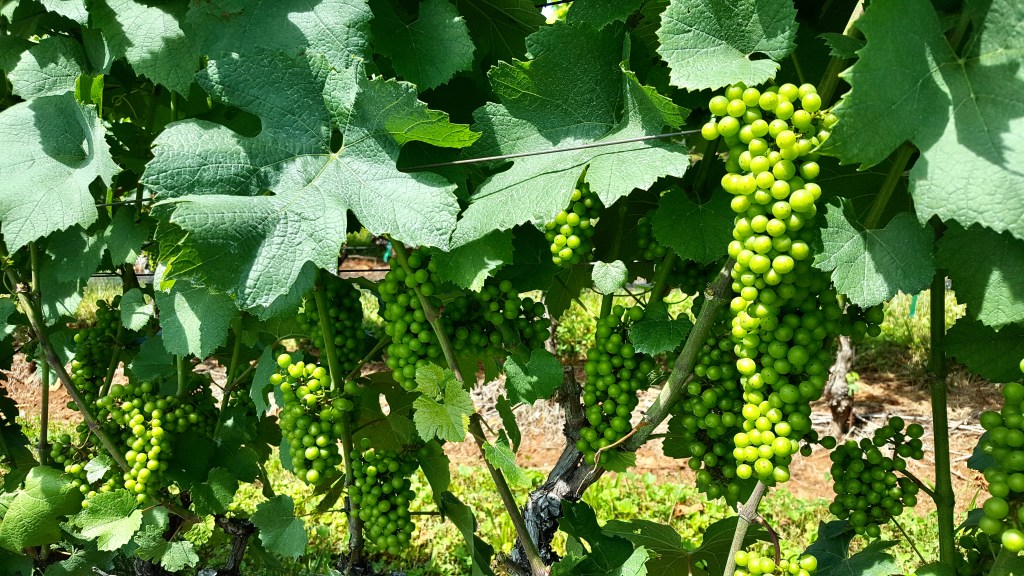
“Moses sent them to spy out the land of Canaan and said, ‘Go up into the Negeb and… the hill country,  and see what the land is, and whether the people who dwell in it are strong or weak, whether they are few or many,  and whether the land that they dwell in is good or bad, and whether the cities that they dwell in are camps or strongholds, and whether the land is rich or poor, and whether there are trees in it or not. Be of good courage and bring some of the fruit of the land.’ Now the time was the season of the first ripe grapes.

“So they went up… and came to Hebron… to the Valley of Eshcol and cut down from there a branch with a single cluster of grapes, and they carried it on a pole between two of them; they also brought some pomegranates and figs… 

“At the end of forty days they returned [and]… came to Moses and Aaron and… brought back word.., and showed them the fruit of the land. ‘We came to the land to which you sent us. It flows with milk and honey, and this is its fruit. However, the people who dwell in the land are strong, and the cities are fortified and very large. And besides, we saw the descendants of Anak there…’

“But Caleb quieted the people before Moses and said, ‘Let us go up at once and occupy it, for we are well able to overcome it.’ Then the men who had gone up with him said, ‘We are not able to go up against the people, for they are stronger than we are.’” Numbers 13:1-2,17-23,25-28,30-31

Rich, abundant grapes turn sour under the dampness of our whining. Instead of claiming His every promise, we inject our howevers and besides, complaining about the difficulties and pruning that make His gifts all the richer. We exchange holy expectancy for self-focused fear, unwilling to undergo the faith tests that would lead to a bounty of true fulfillment. (John 15:1-2)

When we explore the land of walking with God, do we see the richness of life learning to trust Him and the rewards of sanctification, or only the obstacles and harsdships should we travel there? We may hesitate to speak up when God has given us a unique voice, or tackle the first step in reconciliation, or hold back from the dirty work required to repent, or make peace. But hard things are necessary to equip us for all God’s prepared- He would have no flabby followers. A life of faith, where Christ is living through us, is one that ventures out, seizes the clusters, and partakes, because He is the One calling and enabling. (Galatians 2:20; Hebrews 13:20-21)

There are always excuses for disobedience, always reasons for not taking on a new challenge or speaking truth due to fear. But when God promises to give the land, to supply courage and victory to overcome, He keeps His word. Will we go at once?

Lord, help me flourish and bring You praise as Your peasant planting by embracing Your bounty Your way, with zealous faith. (Isaiah 5:7)