Never Stop Growing

“Apollos, a native of Alexandria, came to Ephesus. He was an eloquent man, competent in the Scriptures. He had been instructed in the way of the Lord. And being fervent in spirit, he spoke and taught accurately the things concerning Jesus, though he knew only the baptism of John. He began to speak boldly in the synagogue, but when Priscilla and Aquila heard him, they took him aside and explained to him the way of God more accurately. And when he wished to cross to Achaia, the brothers encouraged him and wrote to the disciples to welcome him. When he arrived, he greatly helped those who through grace had believed, for he powerfully refuted the Jews in public, showing by the Scriptures that the Christ was Jesus.” Acts 18:24-28

Apollos, educated and competent, was neither lax nor smug. His zeal of Spirit ignited desire to teach what he knew of the Scriptures, and to learn more from them himself and grow in wisdom. Helped by Priscilla and Aquila, who were also motivated to see God’s word spread and who graciously took time to teach him, he carried the ways of God to everyone he could. As we through grace believe, by grace we can continue to grow.

Having completed a degree, received a promotion, won the ribbon, or crossed the finish line, we might think we’ve ‘arrived.’ But in the Christian life, there is to be no static living, no complacency, no sense of ‘I’ve made it and don’t need to make anymore.’ The Lord Jesus, ever-living and always interceding, compels a life of purpose and growth until the moment He calls us home. We were created to do His destined work, and it has, overall, no expiration date. He may move us from one service or location to another, but never not move us forward. Through the days and years we’re being changed from glory to glory, we are called to steadfastly grow in the grace and knowledge of God, and help others do the same. (Nehemiah 8:2-3,6-8; Romans 8:34; 2 Corinthians 3:18; Ephesians 2:10)

Are we bent on vibrant, high living, but on our terms? Are we resting on past laurels and think it’s time now to relinquish all effort and let others do the work? Do we shy away from Bible study and meaningful fellowship because we’ve done it all once, or before, discounting the power of His living Word and God’s command to continually add to our faith virtue, and to virtue, knowledge? If we have learned a lot over the years, are we hoarding the wisdom God has nurtured, or sharing it? How are we invigorating others to learn and grow in the ways of the Lord, to stretch their faith and apply His Word? How willing are we to speak up, come alongside, or serve as a role model in ministry or discipleship? (Deuteronomy 30:14; 2 Peter 1:5-7)

It takes daily sustenance in the Word and a will to do heartily the works He’s prepared for us in order to grow and make a difference. Would we initiate fresh determination to follow Apollos’s lead?

Lord, instruct and refine me day by day, that I might speak eloquently and live elegantly for Thee. Keep me open to learning, and courageous to keep growing, that You be glorified.
Ask Rain from the Lord

“Ask rain from the Lord
    in the season of the spring rain,
from the Lord who makes the storm clouds,
    and he will give them showers of rain,
    to everyone the vegetation in the field.
For the household gods utter nonsense,
    and the diviners see lies;
they tell false dreams
    and give empty consolation.
Therefore the people wander like sheep;
    they are afflicted for lack of a shepherd.

“My anger is hot against the shepherds,
    and I will punish the leaders;
for the Lord of hosts cares for his flock, the house of Judah,
    and will make them like his majestic steed in battle.
From him shall come the cornerstone,
    from him the tent peg,
from him the battle bow,
    from him every ruler—all of them together.
They shall be like mighty men in battle,
    trampling the foe in the mud of the streets;
they shall fight because the Lord is with them,
    and they shall put to shame the riders on horses.

“I will strengthen the house of Judah,
    and I will save the house of Joseph.
I will bring them back because I have compassion on them,
    and they shall be as though I had not rejected them,
    for I am the Lord their God and I will answer them.
Then Ephraim shall become like a mighty warrior,
    and their hearts shall be glad as with wine.
Their children shall see it and be glad;
    their hearts shall rejoice in the Lord.” Zechariah 10:1-7

“You do not have, because you do not ask.” James 4:2

In a world that barrages us from all sides and at every sense, we can still experience drought of the soul. Surrounded by a cacophony of lies and deceit, slander and nonsense, we can be hungry for truth and genuine consolation. Pelted with constant enticements for must-haves, opinions and approvals, demands for rights, critiques and false promises, we long for peace and real significance. Enter the Lord of hosts, keeping vigil, and caring for His flock.

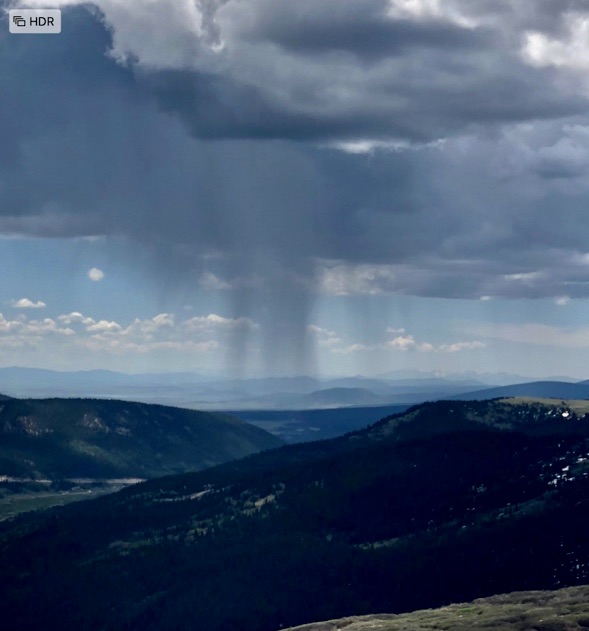
There is a season for spring rain, and spiritually, it may not be readily known or ours to schedule. The Lord who watches over us and holds the deeps in His hands knows time and times and can cause rain at His bidding. We may be weak, but can ask that He strengthen us. We may hurt, but can rest in His compassion. When under affliction, do we pant and complain, and fail to seek the Lord? He invites us to ask for our every need, and He generously dispenses soaking, soothing, healing, satisfying rain according to His bountiful grace. (Psalm 33:7; 121:5-8; Acts 17:24-26; 1 John 5:14)

He sees all injustice. He knows the false teaching, the mistreatment, the neglect and hurt we encounter. He sees and understands every battle before us. And He says, ‘Ask from Me rain.’ Are we honest enough to recognize and declare our need? Would we humble ourselves enough to do so?

What is our dearth today? Have we asked for the rain of His Spirit? That it will pour down from heaven and saturate us, awaken new life, and slake our soul thirst?

Lord, may I continually ask for and drink in Your heavenly rain, and so live vibrantly, mightily, and fruitfully for the fame of Your glorious name.

How Altars Alter Us

“The Lord said to Abram, ‘Go from your country and kindred and your father’s house to the land that I will show you…’

“So Abram…departed from Haran, as the Lord had told him, and Lot went with him. Abram… took Sarai his wife, and Lot his brother’s son, and… they set out… When they came to the land of Canaan, Abram passed through the land to Shechem, to the oak of Moreh… The Lord appeared to Abram and said, ‘To your offspring I will give this land.’ So he built there an altar to the Lord, who had appeared to him. From there he moved to the hill country on the east of Bethel and pitched his tent, with Bethel on the west and Ai on the east. And there he built an altar to the Lord and called upon the name of the Lord. And Abram journeyed on, still going toward the Negeb.

“Abram was very rich in livestock, in silver, and in gold. He journeyed on as far as Bethel to the place where his tent had been at the beginning, between Bethel and Ai, where he had made an altar at the first. And there Abram called upon the name of the Lord…

“Then Abram said to Lot, ‘Let there be no strife between you and me, and between your herdsmen and my herdsmen, for we are kinsmen. Is not the whole land before you? Separate yourself from me. If you take the left hand, then I will go to the right, or if you take the right hand, then I will go to the left. 

“The Lord said to Abram, after Lot had separated from him, ‘Lift up your eyes and look… northward and southward and eastward and westward, for all the land that you see I will give to you and to your offspring forever. I will make your offspring as the dust of the earth, so that if one can count the dust of the earth, your offspring also can be counted. Arise, walk through the length and the breadth of the land, for I will give it to you.’  So Abram moved his tent and came and settled by the oaks of Mamre, which are at Hebron, and there he built an altar to the Lord.” Genesis 12:1,4-9; 13:2-4,8-9,14-18

Abram’s journey to and within Canaan was marked by altars which he built and where he met with God. From first embarking in faith, over hills, through lands, and onto new vistas, from challenge and strife to peace and resolution, each was established in thankfulness and trust, and became a hallowed place of close communion and communication about next steps. All friendships are so populated. (Isaiah 41:8)

Every morning we begin a fresh journey, leaving behind the Haran of yesterday and entering the unknown of today. How do we set off? What is our mindset? Do we plow forward with enthusiastic energy, but aimless? Or would we commit our zeal to the Lord and say, ‘Alter me, lead me’? A life of faith is a great adventure that renews each day, with open ears and hearts, at the altar of God. (Proverbs 27:1; James 4:13-15)

How am I marking my earthly sojourn to commemorate God’s faithfulness, my devotion, and dependence on His grace and direction?

Lord, establish altars of meeting and worship along my days and life paths. May I set You ever before me to know Your way and abide with joy in Your presence. (Psalm 16:8-11)

“Walk Before Me”

“When Abram was ninety-nine years old the Lord appeared to Abram and said to him, ‘I am God Almighty; walk before me, and be blameless, that I may make my covenant between me and you, and may multiply you greatly.’ Then Abram fell on his face. And God said to him, ‘Behold, my covenant is with you, and you shall be the father of a multitude of nations. No longer shall your name be called Abram, but your name shall be Abraham, for I have made you the father of a multitude of nations. I will make you exceedingly fruitful, and I will make you into nations, and kings shall come from you. And I will establish my covenant between me and you and your offspring after you throughout their generations for an everlasting covenant, to be God to you and to your offspring after you. And I will give to you and to your offspring after you the land of your sojournings, all the land of Canaan, for an everlasting possession, and I will be their God.'” Genesis 17:1-8

Wind rushes through and by in rude gusts, barging into fronds, rustling and bending their stalks with loud crushling, pushing, rushing clouds along the early sky. It musses and thrusts, determining every current, lean, spill, and ounce of momentum from behind. Invisible itself, its power is undeniable.

It is natural to think of walking before someone as blazing a trail, forging ahead, leading the way, and often this is so. But when the Me that is behind is God Almighty, the dynamic is different, and divine. Like a mighty wind, He mobilizes us with His limitless power by steering us toward holiness. If we are to proceed and be blameless, we must follow His lead from behind by bold, intimate faith. We walk unseeing, but certain, and trusting. We proceed with keen listening to His voice giving direction from behind. “This is the way, walk in it.” He graciously allows us the thrill and pleasure of being the first to see and savor the new way ahead, the highway of holiness. He builds hunger for more of Him and teaches confidence in every blind but sure step, with the riches of God’s promises the indisputable, blessed result. (Isaiah 30:21; 35:8; Titus 2:11-14)

When ignited by the fire to do, or inspired to head out with resolute action, we may charge ahead of God’s voice in our own strength and plan. The farther we distance ourselves from His earshot, the more apt we are to stray off course. Would we entrust our resolve to Him, and move ahead at His tempo and command?

Perhaps we tarry in apathy or laziness, unwilling to progress unaided with any personal initiative, waiting for the Champion to take our hand and pull us forward. But God Almighty beckons us to action, and promises to hem us in as rear guard. Would we obey and step out in faith? Would we go forth knowing He will steer us and open the way before our trusting eyes? (Psalm 139:5; Isaiah 52:12;58:8)

Lord, strengthen me to walk and be blameless before You. Conform me to Your image as You lead from behind. As Your child, may I bring blessing to others as I bless and exalt You.

Think, Want, Do: All Commended

“And after some days Paul said to Barnabas, ‘Let us return and visit the brothers in every city where we proclaimed the word of the Lord, and see how they are.’ Now Barnabas wanted to take with them John called Mark. But Paul thought best not to take with them one who had withdrawn from them in Pamphylia and had not gone with them to the work. And there arose a sharp disagreement, so that they separated from each other. Barnabas took Mark with him and sailed away to Cyprus, but Paul chose Silas and departed, having been commended by the brothers to the grace of the Lord. And he went through Syria and Cilicia, strengthening the churches.” Acts 15:36-41

Here were two of the gifted greats: Paul the remarkable orator, whose reason and intellectual prowess were stirring powerful transformation among the young churches; and Barnabas, selfless leader, bold companion, forthright teacher, and encourager bent on discipleship building. Both were filled with God’s Spirit, each was instrumental in preaching, and strengthening the brothers, and they had different ideas and plans about how best to do their God-inspired ministry. How to proceed when they disagreed? (4:36-37; 9:26-31; 13:2; 14:19-28)

There are many times in the Body, because we are all distinct, that we feel and think differently while fueled with the same godly motive. It’s important we recognize that the Lord has wired us individually and has broad purposes for His people to fulfill. In most instances, instead of questioning others’ intentions, or criticizing their chosen course of action, we would do well to graciously agree to disagree and support each other’s chosen path. Sometimes disagreements lead to scattered, multiplied fruit. The Lord builds His people and places in different ways, and chooses to inject His children in specific relationships and ministries to do His bidding- none necessarily better nor more important than another- only different. He grants distinct ways of thinking, and varied hows and whats and whos in their performance. (1 Corinthians 12:4-27)

The Lord directs our wants and thoughts when we consecrate ourselves to Him. Our responsibility is to be filled with His Spirit and develop discernment as we take on the mind of Christ against all the mixed messages of our world. When colleagues in the body of Christ have opposing opinions, we are to extend grace. What can I learn? Is there an area I should surrender? Might the Lord be leading us to multiply effectiveness by going in different directions? Rather than nitpick and diminish one another, together we can help build up the body of Christ by doing faithfully what God has called us to do and encouraging others in their work. (Proverbs 3:5-6; Romans 12:1-2; 1 Corinthians 2:16; Ephesians 4:11-16; 5:18)

Would we commend God’s people and work to Him to figure out and disseminate? Would we open ourselves to what His call is for me, and generously support what He’s doing with others? Would we take on an eternal view for His wider plan than just mine, and wholeheartedly delve into my calling? (Colossians 3:23)

Lord, give me Your vision and clarify my call, then courage and joy on the execution. May I be quick to commend and support the ministry of others, and always serve for Your glory and good ends.

None Too Far Gone

“The witnesses laid down their garments at the feet of a young man named Saul… as they were stoning Stephen…

Saul approved of his execution. There arose on that day a great persecution against the church in Jerusalem, and they were all scattered throughout the regions of Judea and Samaria… Saul was ravaging the church, and entering house after house, he dragged off men and women to prison…

“Saul, still breathing threats and murder against the disciples of the Lord, went to the high priest and asked for letters to the synagogues at Damascus, so that if he found any belonging to the Way, men or women, he might bring them bound to Jerusalem. Now as he went on his way, he approached Damascus, and suddenly a light from heaven shone around him. And falling to the ground, he heard a voice saying to him, ‘Saul, Saul, why are you persecuting me?’  And he said, ‘Who are you, Lord?’ And he said, ‘I am Jesus, whom you are persecuting. But rise and enter the city, and you will be told what you are to do…’

“The Lord said to [Ananias], ‘Go, for he is a chosen instrument of mine to carry my name before the Gentiles and kings and the children of Israel. For I will show him how much he must suffer for the sake of my name.’ So Ananias departed and entered the house. And laying his hands on him he said, ‘Brother Saul, the Lord Jesus who appeared to you on the road by which you came has sent me so that you may regain your sight and be filled with the Holy Spirit.’ And immediately something like scales fell from his eyes, and he regained his sight. Then he rose and was baptized…

“For some days he was with the disciples at Damascus. And immediately he proclaimed Jesus in the synagogues, saying, ‘He is the Son of God.’ Acts 7:58-59; 8:1,3; 9:1-6,15-20

Condoning the stoning of an innocent. Persecuting, ravaging, dragging, threatening God’s people. Irredeemable indeed! But wait- the Lord had other plans- actually, more plans. He would use all the bad for good. He gave great license, then stopped Saul in his tracks. He broke into his ugly darkness with irrefutable, blinding light. He penetrated his stiff, violent heart with mercy, and made it pliable. He harnessed his drive and talent and jerked it from evil toward good. Paul’s ministry was uniquely empowered by his understanding of the degenerate rebel mind and God’s irresistible grace. (Romans 8:28)

The Lord knows every secret detail of the ways His children take, and refines as gold for His good will. We may be stained by past choices, or know and long for loved ones who have strayed to places we’re convinced are outside the boundaries of grace, beyond redemption. But God may design those exact ‘far countries’ to utilize specific lessons, prepare for future ministry, and magnify His glory. (Genesis 14:11-16; Job 23:10; Luke 15:11-24)

Is it I who have wandered far, and feel too much shame or regret to return? Is there another rebel whose choices appear to have sealed condemnation forever? None is too lost! Jesus loves sinners and lives to save!

For whom and what impossible situations will we trust God in hope today?

Redeemer God, keep hopeful in prayer for the lost, ever amazed at Your grace and love.

A Touch and a Word

And behold, a leper came to him and knelt before him, saying, ‘Lord, if you will, you can make me clean.’ And Jesus stretched out his hand and touched him, saying, ‘I will; be clean.’ And immediately his leprosy was cleansed…

“When he had entered Capernaum, a centurion came forward to him, appealing to him,  ‘Lord, my servant is lying paralyzed at home, suffering terribly.’ And he said to him, ‘I will come and heal him. But the centurion replied, ‘Lord, I am not worthy to have you come under my roof, but only say the word, and my servant will be healed….’ When Jesus heard this, he marveled and said to those who followed him, ‘Truly, I tell you, with no one in Israel have I found such faith…’  And to the centurion Jesus said, ‘Go; let it be done for you as you have believed.’ And the servant was healed at that very moment.” Matthew 8:2-3,5-8,10,13

A leper wracked in discomfort and shame as an outcast, and a noted commander torn inside by his suffering, paralyzed servant. Both men had great reason for angst, and could have demanded sympathy. The leper had every reason for self-pity, and the centurion for deserving the special treatment. But each knew enough about Jesus to approach Him reverently and trust Him for more, and exercised simple, bold faith in doing so. We read of no fretting, no extraneous expensive alternative efforts, no pomp and show for favored attention, only straightforward requests directed at the One they believed could do anything. And with a touch, and a word, He did the glorious impossible. (Job 42:2)

Our issues and personal concerns can grow so big they fill up all the space in our attention and capacity for care. They can take on a life of their own, crowding out reasonable responses and optimism with fretting and fear. But our Lord knows and understands each pang of the heart, each obstacle we perceive as insurmountable, and can tend to it with a touch, or a word. What is huge to us is small (and precious) to our infinite God. There is nothing too messy for His touch to cleanse or heal, nothing impossible for the breath of His mouth to dissipate or resolve. (Mark 10:27)

When we are entrenched in difficulties- relational, physical, financial, emotional- do we get tourqued up with sweat and effort trying to solve and fix on our own? Do we rattle on and whine about ills rather than tending to them? Do we give up, or shrug off, or choose to ignore issues we should be taking to Jesus? He delights to hear, and help. He rides the skies to come to our aid. In love He touches the worst and speaks into our angst to bring healing, wisdom, clarity, and calm. (Deuteronomy 33:26)

How regularly do we come, kneel, and ask what God will do? For whom, and what dire situations, are we appealing to the Lord for the powerful intervention of His word? And whom are we telling about the marvelous ways He has met and ministered to us that only He could do?

Lord, You offer so much that is mine for the asking. May You always be my first line of appeal, and my only One to praise.

The Possibility of an Antioch

“Saul approved of his execution.

“And there arose on that day a great persecution against the church in Jerusalem, and they were all scattered throughout the regions of Judea and Samaria, except the apostles… But Saul was ravaging the church, and entering house after house, he dragged off men and women and committed them to prison…

“Now those who were scattered because of the persecution that arose over Stephen traveled as far as Phoenicia and Cyprus and Antioch, speaking the word to no one except Jews. But there were some of them, men of Cyprus and Cyrene, who on coming to Antioch spoke to the Hellenists also, preaching the Lord Jesus. And the hand of the Lord was with them, and a great number who believed turned to the Lord. The report of this came to the ears of the church in Jerusalem, and they sent Barnabas to Antioch. When he came and saw the grace of God, he was glad, and he exhorted them all to remain faithful to the Lord with steadfast purpose, for he was a good man, full of the Holy Spirit and of faith. And a great many people were added to the Lord. So Barnabas went to Tarsus to look for Saul, and when he had found him, he brought him to Antioch. For a whole year they met with the church and taught a great many people. And in Antioch the disciples were first called Christians.” Acts 8:1,3; 11:19-26

The ravaging of the early church could have appeared to be its demise, but in fact, it worked just the opposite. The more vehement the persecution, the more the church spread, and grew. The Lord often does that- turns the plots of men into fodder for bringing about His purposes. What enemies meant for evil, God used for amazing good, to scatter and multiply His church. (Genesis 50:20)

When Jesus died, His agony was excruciating, and on the surface appeared a failure of His mission. But as God always does, He overturned the wisdom of man to accomplish His eternal, redemptive plan for mankind. He does so for us today. Truly, we do not see the way He sees. He sees, and brings about, growth from persecution, fruit from barrenness, life from death. (Isaiah 53:2-6; 55:8-9; John 12:24; 1 Corinthians 1:20,25)

Who wants hardship? Mistreatment? A cross? Often we’d choose to remain quiet and hide our faith over speaking up and being cancelled, ridiculed, hated, or persecuted. But God intends and uses and redeems our trials in marvelous ways we would not otherwise know, in ways we could not beforehand imagine. He raises up Antiochs in our hardest of hard circumstances, and therein, gloriously, displays grace and gladness. He stretches and matures us, and is magnified as we share the sufferings of Christ in His power. If we grasp the ‘better’ of God’s eternal plan, we will learn to endure for the joy that is ahead, though presently unseen. This is an adventure in bold faith, and it is always worth it. (Philippians 3:10; Hebrews 12:2-3)

Do we buckle under suffering, and view it as a dead end? Considering the Lord’s infinite wisdom and goodness, what possibilities for growth and glory might we expect, and even participate in, instead?

Lord, help me see with eyes of faith beyond today’s hurt to tomorrow’s Antioch, where You are exalted and bearing much fruit.

Where is the Shame?

“After these things, the officials approached me and said, ‘The people of Israel and the priests have not separated themselves from the peoples of the lands with their abominations… They have taken some of their daughters to be wives for themselves and their sons, so that the holy race has mixed itself with the peoples of the lands. And in this faithlessness the hand of the officials and chief men has been foremost.’ As soon as I heard this, I tore my garment and my cloak and pulled hair from my head and beard and sat appalled. Then all who trembled at the words of God, because of the faithlessness of the returned exiles, gathered around me… At the evening sacrifice I rose from my fasting,.. and fell upon my knees and spread out my hands to the Lord my God, saying:

“O my God, I am ashamed and blush to lift my face to you, for our iniquities have risen higher than our heads, and our guilt has mounted up to the heavens. From the days of our fathers to this day we have been in great guilt. And for our iniquities we… have been given into the hand of the kings of the lands, to the sword, to captivity, to plundering, and to utter shame… But now for a brief moment favor has been shown by the Lord, to leave us a remnant and to give us a secure hold within his holy place, that our God may brighten our eyes and grant us a little reviving in our slavery. For we are slaves. Yet our God has not forsaken us.., but has extended his steadfast love… to grant us some reviving to set up the house of our God, to repair its ruins, and to give us protection in Judea and Jerusalem.” Ezra 9:1-9

After a successful journey back to Jerusalem under God’s gracious protection, Ezra realized not all was right. Though imperfect like everyone else, he knew God’s word and when people had broken it. Upon learning about the forbidden intermarriages, he was appalled, stricken, and ashamed. He saw sin for what it was: horrid rebellion against the high and holy God, and repulsive self-indulgence. Faithlessness at its worst. He bowed immediately before the only One who could revive Israel. (Ezra 7:10)

Our world has turned morally topsy-turvy. We’ve grown apathetic to sin, unaccustomed to conviction and repentance. A diminished view of God and exalted perception of man has caused shame to all but disappear, actually disguising itself as welcome while ‘shaming’ those who uphold godly convictions. Only a right understanding of God’s righteousness and worth will brighten our moral eyes.

How well do we know the Bible on issues that concern us- sexual mores, work ethics, relationship expectations, recreation, financial stewardship? The more familiar we are with God’s word, the keener will be our consciences, and the clearer our path when considering life choices.

And when we stray into sin, are we grieved? Do we heed the Spirit’s conviction and call to return, confident in His mercy? He alone removes our shame. (Ezra 9:10-15; Isaiah 30:15; Zephaniah 3:19; Romans 10:11; Hebrews 4:16; 1 Peter 2:6,24; 1 John 1:9)

Lord, guard me from the allure of surrounding peoples opposed to you. Brighten my spiritual eyes, and revive my heart to be whole and holy, for Your sake.

“Pray Then Like This”

 “And when you pray, you must not be like the hypocrites. For they love to stand and pray in the synagogues and at the street corners, that they may be seen by others. Truly, I say to you, they have received their reward. But when you pray, go into your room and shut the door and pray to your Father who is in secret. And your Father who sees in secret will reward you.

“And when you pray, do not heap up empty phrases as the Gentiles do, for they think that they will be heard for their many words. Do not be like them, for your Father knows what you need before you ask him. Pray then like this:

“’Our Father in heaven,
hallowed be your name.
Your kingdom come,
your will be done,
    on earth as it is in heaven.
Give us this day our daily bread,
and forgive us our debts,
    as we also have forgiven our debtors.
And lead us not into temptation,
    but deliver us from evil.'” Matthew 6:5-13

‘Your flesh will want to make much of you rather than of Me. You are prone to want personal applause or profit from your prayers, instead of My glory. Don’t be this way, and turn from it– then, pray like this…’ Jesus always taught with acuity because He knew the heart of men. His instructions on prayer included dos and don’ts that focus and empower communion with God. His familiar example of the “hypocrites” (Pharisees), who made pompous show of their prayers, illustrated a stark contrast to His own practice of honor, submission to, and dependence on His Father. (Matthew 3:13-4:11; Luke 3:21-22; 4:42; 5:1-2,9-11; John 2:25; Hebrews 4:12,16)

Prayer is a vital mode for communication with the Almighty, and a privileged gift for His children not to be wasted or abused. It faces God-ward, not to be uttered or practiced for others. When we pause and invite the Lord to fill our vision, our affection and utterances will be toward Him alone. Do we haste to speak, and fail to block our minds from an audience we might subconsciously desire to instruct or amuse? What if we approached the Almighty in holy hush, concentrating on only Him?

Beware empty phrases, meaningless repetition, formulaic snippets that are merely noise. Make every word count. Acknowledging God as supreme, we fit Him as our lens, and prayer flows through His goodness and worth. Emotions, self, and needs are swallowed in the overwhelming privilege of approaching His Highness because Jesus opened the way. (Matthew 27:51)

Offering myself a living sacrifice to test and know His will, then yielding to all its parameters, is essential. Whose will drives my words? Would I spend heavenly grace on selfish wants, or needs that He has meted out so He can supply? Do I expect Him to overlook sin baggage, or come with confession to be first cleansed? (Romans 12:1-2; Philippians 4:19; 1 John 1:9)

When I conclude, would I cast myself fully on His grace for living?

Holy Father in heaven, I need thee every hour. Help me focus on You as closer and more real than any care, person, or thing. I offer You my prayers and prayer life, that You be exalted and I be in proper place to depend on, serve, and magnify Your name.