Apply the Hyssop 

 Then Moses called all the elders of Israel and said to them, “Go and select lambs for yourselves according to your clans, and kill the Passover lamb. Take a bunch of hyssop and dip it in the blood that is in the basin, and touch the lintel and the two doorposts with the blood that is in the basin. None of you shall go out of the door of his house until the morning. For the Lord will pass through to strike the Egyptians, and when he sees the blood on the lintel and on the two doorposts, the Lord will pass over the door and will not allow the destroyer to enter your houses to strike you.” Exodus 12:21-23

Purge me with hyssop, and I shall be clean; wash me, and I shall be whiter than snow.” Psalm 51:7

After this, Jesus, knowing that all was now finished, said (to fulfill the Scripture), ‘I thirst.’ A jar full of sour wine stood there, so they put a sponge full of the sour wine on a hyssop branch and held it to his mouth. When Jesus had received the sour wine, he said, ‘It is finished,’ and he bowed his head and gave up his spirit.” John 19:28-30

The hyssop used to spread the blood of the Passover lamb over lintels of doors was a branch of protection from the angel of death, swathing a sign of faith and the mark that would free from slavery.

In David’s prayer of deep repentance, hyssop was requested as the branch of cleansing, and freedom from sin.

At Jesus’s crucifixion, the hyssop branch offering a sponge of vinegar quenched Jesus’s thirst so His work of the cross could be announced as finished. Thus, it wrought freedom, by Christ’s death, from eternal death, that we might live forever in our Savior’s presence.
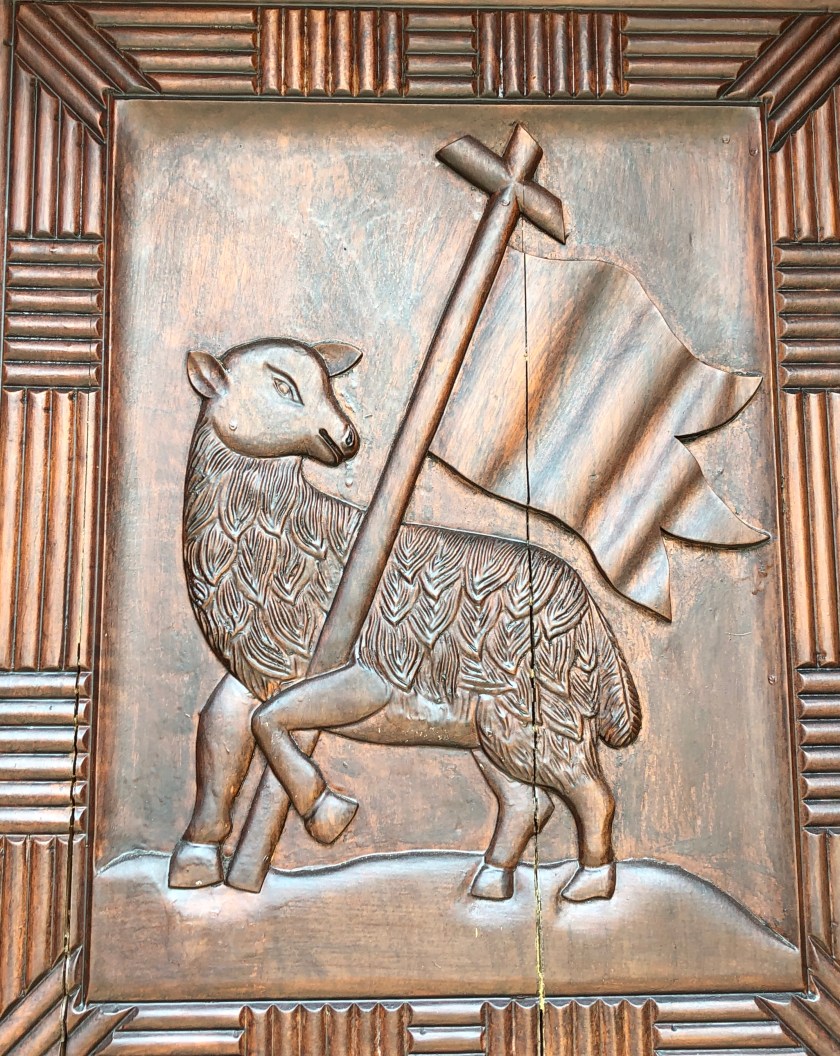
EF0861F8-5EA8-4607-9AEE-36D203866A1E_1_201_a

Hyssop, an herb in the mint family that was used in ancient times for cleansing, medicinal application, and flavoring, is a sturdy, fragrant creation of God. We can follow its use through Scripture with figurative hands, and apply its properties to our daily needs. Will we hold fast the stalk of God’s promised ministry to us?

Apply the hyssop, Lord, when looms the dreaded death of dreams, hope, vitality, or opportunity. Guard me from its sting, protect me from its victory. Deliver me from fear, and secure me under Your heavenly cover. (Psalm 91:3-6; 1 Corinthians 15:54-55)

Apply the hyssop, Lord, when I fall to temptation. Wash me clean from every sin of thought, my complaining attitudes, my selfish actions, my careless words and huffy tone of voice against others. All are an affront to You. Forgive me. Purify me through and through. Heal me once for all from long-held sin habits, freeing me to new spiritual vitality.

Apply the hyssop, Lord, as I thirst for Thee. In me deepest pain and lack, “as a deer pants for flowing streams, so pants my soul for you, O God.” I yearn for Your grace, for more of Your Holy Spirit, Your wisdom, patience, perspective, strength, zeal, insight, and peace. Slake my thirst until I want no more. You alone satisfy the longing soul. (Psalm 42:1)

Amen.

The Faces of our Places (Or: How Grows Your Garden?)

Jesus went out with his disciples across the brook Kidron, to a place called Gethsemane, where there was a garden. Judas, who betrayed him, also knew the place, for Jesus often met there with his disciples. And he said to his disciples, ‘Sit here while I pray.’ And he took with him Peter and James and John, and began to be greatly distressed and troubled. And he said to them, ‘My soul is very sorrowful, even to death. Remain here and watch.’ And going a little farther, he fell on the ground and prayed, ‘Abba, Father, all things are possible for you. Remove this cup from me. Yet not what I will, but what you will.’ And he came and found them sleeping, and said, ‘Could you not watch one hour?’ And again he went away and prayed, saying the same words. Being in agony he prayed more earnestly; and his sweat became like great drops of blood falling down to the ground. And he came the third time and said to them, ‘Are you still sleeping and taking your rest? It is enough; the hour has come. The Son of Man is betrayed into the hands of sinners. Rise, let us be going; see, my betrayer is at hand.’

“Judas, having procured a band of soldiers and some officers from the chief priests and the Pharisees, [came] with lanterns and torches and weapons. He drew near to Jesus to kiss him, but Jesus said to him, ‘Judas, would you betray the Son of Man with a kiss?‘ So [they] arrested Jesus and bound him.” Mark 14:32-37,39-42; Luke 22:44,47-48; John 18:1-3,12

The garden was a place of regular fellowship, meaningful communion in the cool of shade, sweetened by fragrances of flowering bushes, likely lush hanging pomegranates and figs. A familiar, comfortable, beautiful oasis. But this place of peace and refreshment became a place of disappointment, and sorrow, where Jesus’s closest companions fell asleep after being asked to stay alert and support Him in prayer. It was a place of personal, agonized wrestling in prayer as the Perfect One faced taking on the sin of the world and being forsaken by God, the unblemished Lamb having His hands and feet driven through with crude nails. This hallowed Gethsemane became a place of ultimate surrender of His will to the Father’s. Then it was darkly shadowed by the brutish betrayal of one friend, the cowardly fleeing of others, and his cruel, unjust arrest.

Garden bench, Highlands, NC

A garden has many faces. Special places in our lives can be graced with joy-filled fellowship and contentment. We cherish them and long to stay, undisturbed. But sometimes their peace is brutally interrupted by tragedy, despair, hurt, sorrow. No Gethsemane is consistently peaceful, no garden always free of some weed of confusion, sting of bereavement, or barrenness of soul. 

The Lord gives us gardens to tend, places to meet with him and find comfort. And the communion we share is meant to supply for the seasons of fallowness and suffering, the will to yield to His sovereign plan even when it involves pain.

How does my garden grow? How am I handling the space entrusted to me?

Father, keep me vigilant and surrendered, a faithful tender of the garden You’ve entrusted to me. Bloom here and show forth Your glory.

Set First the Altar

“‘Thus says Cyrus king of Persia: The Lord, the God of heaven, has charged me to build him a house at Jerusalem, which is in Judah. Whoever is among you of all his people, may his God be with him, and let him go up to Jerusalem, which is in Judah, and rebuild the house of the Lord, the God of Israel—he is the God who is in Jerusalem’… Now people of the province came up out of the captivity of those exiles whom Nebuchadnezzar the king of Babylon had carried captive to Babylonia. They returned to Jerusalem and Judah, each to his own town… When the seventh month came, and the children of Israel were in the towns, the people gathered as one man to Jerusalem. Then arose Jeshua the son of Jozadak, with his fellow priests, and Zerubbabel the son of Shealtiel with his kinsmen, and they built the altar of the God of Israel, to offer burnt offerings on it, as it is written in the Law of Moses. They set the altar in its place, for fear was on them because of the peoples of the lands, and they offered burnt offerings on it to the Lord, burnt offerings morning and evening. And they offered the daily burnt offerings, as each day required. From the first day of the seventh month they began to offer burnt offerings to the Lord. But the foundation of the temple of the Lord was not yet laid.” Ezra 1:2-3; 2:1; 3:1-4,6

At the pronouncement and provision of Persia’s king Cyrus, tens of thousands of exiles made their way back to Israel and settled in their towns. The task of rebuilding the temple loomed before them in an uncertain and fearful time, having returned to a land where they were unwelcome. When the priests gathered, their first act was to establish the altar and sacrifice burnt offerings to their LORD according to God’s command.

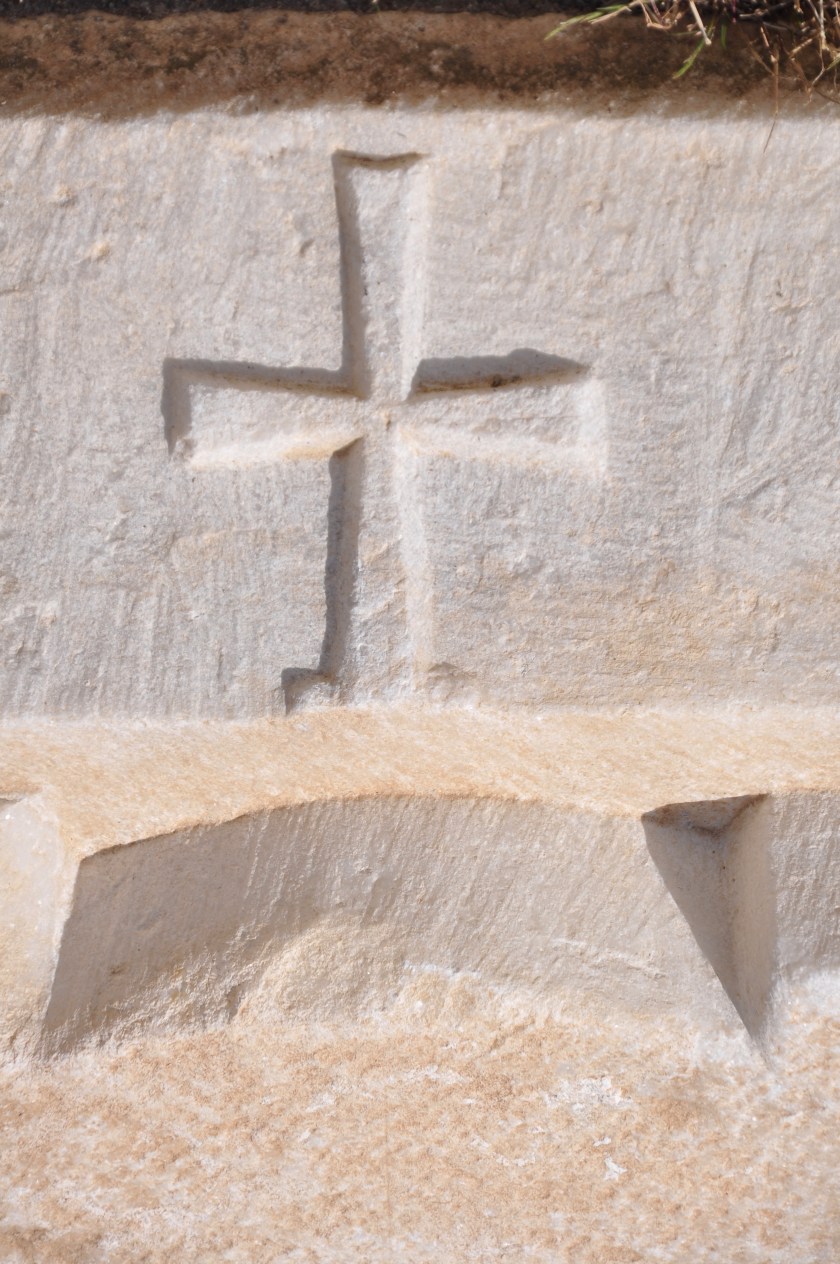
Cross in stone 5, Turkey

At the start of a new year, or any new calling or untried path, there are unknowns that can bring tentative emotions and fear. We may see the big picture and be overwhelmed at the enormity of a task, and wonder how it can all be done. We may be choked by failing health associated with age, precarious employment, ongoing treatments with unknown results and side effects, significant challenges with children, impenetrable walls in relationships dear to us. Rebuild the whole temple? Impossible! But we can start with first things. We can begin with the altar.

As Elisabeth Elliot would say, “Do the next right thing.” Establishing a regular place and time for worship, laying down our burdens on the altar of Christ’s sufficiency, practicing consistent sacrifice of self-interest and effort, do much to assuage our fears and clarify our perspective. When we set first the altar, the delight it affords fuels our energy and wisdom for next steps.

What fears lurk at present– of what others think, of my loved ones’ choices, of future security? What regrets or failures weigh on my soul? What inordinate responsibilities encumber my mind and mess with my peace?

Sufficient Savior, draw me daily to the altar of Your cross, where You vanquished my burdens forever. Keep me worshiping You first and always. (Hebrews 10:10)


Never Too Late for a U-Turn

Manasseh was twelve years old when he began to reign, and he reigned fifty-five years. He did what was evil in the sight of the Lord, according to the abominations of the nations whom the Lord drove out before the people of Israel. He rebuilt the high places that his father Hezekiah had broken down, and he erected altars to the Baals, and made Asheroth, and worshiped all the host of heaven and served them. And he burned his sons as an offering, and used fortune-telling and omens and sorcery, and dealt with mediums and with necromancers. He did much evil. Manasseh led Judah astray, to do more evil than the nations whom the Lord [had] destroyed. 

The Lord spoke to Manasseh and to his people, but they paid no attention. Therefore the Lord brought upon them the army of Assyria, who captured Manasseh with hooks and bound him with chains of bronze and brought him to Babylon. And when he was in distress, he entreated the favor of the Lord his God and humbled himself greatly before the God of his fathers. He prayed to him, and God was moved by his entreaty and heard his plea and brought him again to Jerusalem into his kingdom. Then Manasseh knew that the Lord was God. And he took away the foreign gods from the house of the Lord, and all the altars that he had built. He restored the altar of the Lord and offered on it sacrifices of peace offerings and thanksgiving, and he commanded Judah to serve the Lord.” 2 Chronicles 33:1-3,6,9-13,15-16

Imagine a half-century regime that promoted rampant idol worship, child sacrifice, and sorcery, and what it would do to its monarch and the fabric of his country. Manasseh was proud and wicked through and through, over years and decades. Yet, the LORD pursued him, and the appointed time came when he cried out and humbly entreated Him. God transformed his heart. His outlook. His inclinations and motivations. His life’s drive and purpose. Manasseh abolished all that had drawn his affection from the true God, and reestablished proper worship after a lifetime of running in the opposite direction.

U-turn sign

The Almighty can bring this kind of transformation in anyone. We may struggle with besetting sins, and bemoan we will never have victory, never rise beyond our weak flesh in certain areas. But God is able! He who conquered the grave breaks the chains of sin and gives resurrection power to demolish strongholds in our lives. Entreat Him! (Romans 7:15,18-25; 1 Corinthians 15:54-57; 2 Corinthians 9:8; 10:3-6; Jude 24)

There may be loved ones for whom we despair, who have charted a course of destruction or rebellion and seem beyond repair. Take heart! Pray without ceasing!  Expect God to pursue, save, and transform! (Ephesians 3:20; Hebrews 7:25)

“His love my heart has captive made,
His captive would I be,
For He was bound, and scourged and died,
My captive soul to free.

He breaks the power of canceled sin,
He sets the prisoner free;
His blood can make the foulest clean;
His blood availed for me.”  ~Charles Wesley (1707-1788)

Heavenly Father, guard me against complacency and discouragement with self, and lethargy or hopelessness in prayer for others. Fix my trust in You Who can do all things, and do all things well to the praise of Your glory. (Mark 7:37)


Slaying Spiritual Slander

“After these acts of faithfulness, Sennacherib king of Assyria came and invaded Judah. [Hezekiah said,] ‘Be strong and courageous. Do not be afraid or dismayed before the king of Assyria and all the horde that is with him, for there are more with us than with him. With him is an arm of flesh, but with us is the Lord our God, to help us and to fight our battles.’ And the people took confidence from the words of Hezekiah king of Judah.

“After this, Sennacherib sent his servants to Jerusalem to Hezekiah and to all the people, saying, ‘On what are you trusting, that you endure the siege in Jerusalem?  Is not Hezekiah misleading you, when he tells you, “The Lord our God will deliver us from the hand of the king of Assyria”? Has not this same Hezekiah taken away his high places and his altars? Do you not know what I and my fathers have done to all the peoples of other lands? Who among all the gods of those nations was able to deliver his people from my hand, that your God should be able to deliver you from my hand? No god of any nation or kingdom has been able to deliver his people from my hand. How much less will your God deliver you out of my hand!’ And his servants said still more against the Lord God and Hezekiah. And he wrote letters to cast contempt on the Lord, and to speak against him.  And they shouted it with a loud voice to frighten and terrify them. And they spoke of the God of Jerusalem as they spoke of the gods of the peoples of the earth, which are the work of men’s hands.

“Then Hezekiah the king and Isaiah the prophet prayed because of this and cried to heaven. And the Lord saved Hezekiah and the inhabitants of Jerusalem, and he provided for them on every side.” 2 Chronicles 32:1,7-20,22

Hezekiah had led righteously and wisely, yet encountered a formidable foe in Assyria’s heathen king, whose first swipe was to undermineJudah’s faith and slander his God. As with all who know not God, Sennacherib underestimated the Almighty and His people. Hezekiah’s godly response? Direct attention to the LORD, and pray!

Yellow Cactus

When faced with spiritual slander, are we so bold? We might be tempted to stew in the injustice of attacks, or allow our minds to run trails of fear and doubt, but these play right into the devil’s conniving hand. He is wily in his lies and trickery, and does all he can to sabotage truth, confuse our beliefs, distort reason, and spread spiritual poison. Rather than yield to his deceit, would we remind ourselves that our God rules above all gods, and enlist spiritual confidantes to pray expectantly together? The One who is ‘great with us’ is never surprised or flustered, but prays for us, provides Spirit-filled friends to come alongside, and protects our souls. (John 8:44; 17:15; Revelation 12:9-10)

We may not experience the remarkable deliverance Hezekiah did, but we will know the spiritual victory of trusting the only trustworthy One, and knowing Him better.

One and Only, let me never stop reinforcing my defenses against the enemy’s slander. Keep strong my convictions and generous my encouragement of others’ faith, trusting Your outcomes.


Nothing Just Happens

Josiah kept a Passover to the Lord in Jerusalem. He appointed the priests to their offices and encouraged them in the service of the house of the Lord. And he said to the Levites who taught all Israel and who were holy to the Lord, ‘Put the holy ark in the house that Solomon built… Now serve the Lord your God and his people Israel. Prepare yourselves according to your fathers’ houses by your divisions, as prescribed. And stand in the Holy Place according to the groupings of the fathers’ houses of your brothers, and according to the division of the Levites by fathers’ household. And slaughter the Passover lamb, and consecrate yourselves, and prepare for your brothers, to do according to the word of the Lord’… 

“When the service had been prepared for, the priests stood in their place, and the Levites in their divisions according to the king’s command. And they slaughtered the Passover lamb… And afterward they prepared for themselves and for the priests, because the priests were offering the burnt offerings; so the Levites prepared for themselves and for the priests, the sons of Aaron. The singers, the sons of Asaph, were in their place; and the gatekeepers were at each gate. They did not need to depart from their service, for their brothers the Levites prepared for them. So all the service of the Lord was prepared that day, to keep the Passover and to offer burnt offerings on the altar of the Lord. And the people of Israel who were present kept the Passover at that time… None of the kings of Israel had kept such a Passover as was kept by Josiah, and the priests and the Levites, and all Judah and Israel, and the inhabitants of Jerusalem.” 2 Chronicles 35:1-6,10-11,14-18

Josiah’s reinstitution of the Passover in Judah did not just happen. From an early age, he set his heart to seek God. This regular communion led him to purge Judah of idolatry, repair the temple, respond to the Book of the Law, inquire of the LORD, and determine to keep His word. Every step in pursuing God with humility was a step forward in earnest obedience, and none just occurred without thought and deliberation. His careful preparation helped all Israel to serve and exalt their God.

Cargo Ship 2, San Francisco Bay

And so it is with us. Worship does not just happen. Walking in the Spirit does not come naturally, or even easily. Following our Lord and bearing spiritual fruit are not the default behavior of sinful man. We might desire to live righteously and please the Savior we love, but unless we take care to prepare diligently for every day and occasion, it will not simply occur.

When am I taking time to worship my Lord, to proclaim and delight in His attributes? Where have I scheduled a block of time in my day to read God’s word, meditate on it, specifically and expectantly pray over its instruction and my response to its convictions and warnings? In what situations do I plan to apply its truths and guidance? How do I prepare for difficult conversations, building relationships, wise and effective work, meaningful service to others?

Father, please guide me in consistent, thoughtful preparation to bring holy resolutions to fruition, for Your glory.

Start with the Sanctuary

In the first year of his reign, in the first month, he opened the doors of the house of the Lord and repaired them. He brought in the priests and the Levites and assembled them in the square on the east and said to them, ‘Hear me, Levites! Now consecrate yourselves, and consecrate the house of the Lord, the God of your fathers, and carry out the filth from the Holy Place. For our fathers have been unfaithful and have done what was evil in the sight of the Lord our God. They have forsaken him and have turned away their faces from the habitation of the Lord and turned their backs. They also shut the doors of the vestibule and put out the lamps and have not burned incense or offered burnt offerings in the Holy Place to the God of Israel… My sons, do not now be negligent, for the Lord has chosen you to stand in his presence, to minister to him and to be his ministers and make offerings to him.’ Then the Levites arose… They gathered their brothers and consecrated themselves and went in as the king had commanded, by the words of the Lord, to cleanse the house of the Lord. The priests went into the inner part of the house of the Lord to cleanse it, and they brought out all the uncleanness that they found in the temple of the Lord into the court of the house of the Lord. And the Levites took it and carried it out to the brook Kidron. They began to consecrate on the first day of the first month, and on the eighth day of the month they came to the vestibule of the Lord. Then for eight days they consecrated the house of the Lord, and on the sixteenth day of the first month they finished.” 2 Chronicles 29:3-7,11-12,15-17

A new king, new reign, new perspective, new mission. Hezekiah would set Israel on the right path by restoring worship in the sanctuary to its rightful place. After the priests had done their cleansing and preparatory work, the new sovereign rose early to bring sacrifices and lead worship with song to the LORD. His leadership and example of humble, joyful adoration of God was contagious, and set a focus of God-centered rejoicing for the nation. (2 Chronicles 22:20,24-31,36)

As we begin a new year, holding all its promise and unknowns, hopes and plans, what will take first priority? As priests of the King of kings entrusted with much, how faithfully will we tend to our first responsibility, that of His sanctuary? Where have disordered wants or affections upended first right things? What self-stroking, what depleting or unfruitful habits, what long-held resentments or prejudices need to be discarded? What will we do in our schedules and our hearts to open wide doors to true, Christ-centered sacrifice and trim the lamps of grateful praise? (1 Peter 2:9)

Sovereign Lord Who bestows my royal priesthood, may I be faithful today, and this year, to maintain pure and glad worship, and to proclaim Your excellencies in all I do and say.

Wondrous Deeds From Beginning to End

I will sing to the Lord, for he has triumphed gloriously;
    the horse and his rider he has thrown into the sea.
The Lord is my strength and my song,
    and he has become my salvation;
this is my God, and I will praise him,
    my father’s God, and I will exalt him.

Your right hand, O Lord, glorious in power,
    your right hand, O Lord, shatters the enemy.
In the greatness of your majesty you overthrow your adversaries.

Who is like you, O Lord, among the gods?
    Who is like you, majestic in holiness,
    awesome in glorious deeds, doing wonders?

You have led in your steadfast love the people whom you have redeemed;
    you have guided them by your strength to your holy abode.

The Lord will reign forever and ever.” Exodus 15:1-2,6-7,11,13,18

“And I saw what appeared to be a sea of glass mingled with fire—and also those who had conquered.., standing beside the sea of glass with harps of God in their hands. And they sing the song of Moses, the servant of God, and the song of the Lamb, saying,

‘Great and amazing are your deeds,
    O Lord God the Almighty!
Just and true are your ways,
    O King of the nations!
Who will not fear, O Lord,
    and glorify your name?
For you alone are holy.
    All nations will come
    and worship you,
for your righteous acts have been revealed.’” Revelation 15:2-4

At the time of Israel’s marvelous deliverance through the Sea from cruel slavery in Egypt, Moses led those delivered in song, exalting the majestic, wonder-working LORD. And at the end, as Revelation comes to a close describing the future, ultimate victory of the Almighty, his song is sung again. Wondrous deeds from beginning to end are cause of great and unending praise.

Our mighty Lord, Who is the same from first to last, does not change in any facet of His character, any manner of working His perfect will, any fulfillment of His promises. He is exquisite and exact in all He does, never easing in purpose, wavering in love, or waning  in power. He can be trusted, He deserves exaltation. Every moment, every day. (Hebrews 13:8; 1 Peter 1:20; Revelation 22:13)

As one year comes to a close, will I take time to reflect back and trace His glorious deeds in my life, in those I love, in His church, in the world? Will I count displays of His grace, light shed in understanding, new lessons learned, deliverances from habits or sorrow’s choke? Do I recognize He is the Mighty One behind conviction, inspiration, enabling? Will I praise Him for immovable peace in storms, inexplicable songs in the night, bountiful provision in my meager desire, energy, offerings?

Will I choose to close this year with praise that covers all its shocks, losses, wastes, disappointments, regrets, and griefs? Will I gratefully sing of the omniscient, loving hand that gripped mine intractably through them all, and leads forward with hope and promise? The LORD Who has triumphed gloriously will ever do so, forging with us into a future He orchestrates with sovereign favor.

I lift high Your majesty and worth, O God. May I ever marvel and sing at Your glorious deeds.

Even So, The Enemy Comes

And Asa did what was good and right in the eyes of the Lord his God. He took away the foreign altars and the high places and broke down the pillars and cut down the Asherim and commanded Judah to seek the Lord, the God of their fathers, and to keep the law and the commandment. He also took out of all the cities of Judah the high places and the incense altars. And the kingdom had rest under him. He built fortified cities in Judah, for the land had rest. He had no war in those years, for the Lord gave him peace… [Then] Zerah the Ethiopian came out against them with an army of a million men and 300 chariots, and came as far as Mareshah. And Asa went out to meet him, and they drew up their lines of battle in the Valley of Zephathah at Mareshah. And Asa cried to the Lord his God, ‘O Lord, there is none like you to help, between the mighty and the weak. Help us, O Lord our God, for we rely on you, and in your name we have come against this multitude. O Lord, you are our God; let not man prevail against you.’ So the Lord defeated the Ethiopians before Asa and before Judah, and the Ethiopians fled. Asa and the people who were with him pursued them as far as Gerar, and the Ethiopians fell until none remained alive, for they were broken before the Lord and his army.” 2 Chronicles 14:2-6,9-13

Asa did everything right as he established his reign, and all was well. Until it was not. Against his world, trouble brewed. Even though he pleased his Lord, still the enemy snorted, pawed the dirt, and came in full aggression. He always does. Asa met his adversary in the best way possible, relying on and fighting in the powerful name of his unique, unassailable, victorious LORD.

D0CA902F-792E-4965-BFAE-4BAF2F19089F

When we plan and faithfully build our good kingdom, do we believe we deserve a specific outcome, that our efforts should reap our desired rewards? When formulas have been followed, rules obeyed, and prescriptions filled, do we chafe when God does not keep peace and bring our expected results? Are we subconsciously determining expectations that do not align with His? “In me you may have peace. In the world you will have tribulation. But take heart; I have overcome the world.” My chosen behavior must be for the Lord, not myself, and my treasure fixed in Him, not any earthly prize. (John 16:33)

“There will be scoffers, following their own ungodly passions… who cause divisions, worldly people, devoid of the Spirit. But you, beloved, building yourselves up in your most holy faith and praying in the Holy Spirit, keep yourselves in the love of God, waiting for the mercy of our Lord Jesus Christ.” Conflict in this world is a given, no matter what, but we have divine security and unshakable hope: Now to him who is able to keep you from stumbling and to present you blameless before the presence of his glory with great joy, to the only God, our Savior, through Jesus Christ our Lord, be glory, majesty, dominion, and authority, before all time and now and forever. Amen.” (Jude 18-21,24-25)

Let kings and warriors say amen!

What I Have

After this Jesus went away to the other side of the Sea of Galilee, which is the Sea of Tiberias. And a large crowd was following him… Jesus went up on the mountain, and there he sat down with his disciples. Lifting up his eyes, then, and seeing that a large crowd was coming toward him, Jesus said to Philip, ‘Where are we to buy bread, so that these people may eat?’ He said this to test him, for he himself knew what he would do. Philip answered him, ‘Two hundred denarii worth of bread would not be enough for each of them to get a little.’ One of his disciples, Andrew, Simon Peter’s brother, said to him, There is a boy here who has five barley loaves and two fish, but what are they for so many?’ Jesus said, ‘Have the people sit down.’ Now there was much grass in the place. So the men sat down, about five thousand in number.  Jesus then took the loaves, and when he had given thanks, he distributed them to those who were seated. So also the fish, as much as they wanted. And when they had eaten their fill, he told his disciples, ‘Gather up the leftover fragments, that nothing may be lost.’ So they gathered them up and filled twelve baskets with fragments from the five barley loaves left by those who had eaten.” John 6:1-3,5-13

Spending time with Jesus takes us into many situations that to our human eyes look impossible. His way is to teach us of Himself, and to engage us in His supernatural workings. And He always nourishes us by our communion. When He presents an opportunity, and nudges me to accept, I can expect His grace to abound. When He calls me to a new task, I can bring my inadequacies and fears and watch Him replace them with His sufficient provision. He gives so much more than I can imagine.

Bread loaves at famers market

I have Jesus, abiding with me. I have His voice, His instruction. I have resources He has provided, and His shared passion for people and their spiritual hunger. I have His questions that drive me to discover, to dig, to look around and understand in context and use what is available and thus grow in faith. I have His clear, often specific word. I have the gumption to listen and follow, by His grace. I have the example of those who have gone before, and of how God has worked in the past. I have a God to thank for every good and perfect gift. In His name, I can offer all I have and watch Him multiply and feed, in the green grass of His pasture. And He will give leftovers of sustenance, thankfulness, and joy. (2 Corinthians 9:10; James 1:17)

Will I take up the challenge? What loaves and fish have I to offer for His divine multiplication to the hungry?

Father, You call me to a work that above all is believing in You. Teach me so to feed on You that all I give out is spirit and life, and others see You are the Holy One of God. (John 6:29,63,69)