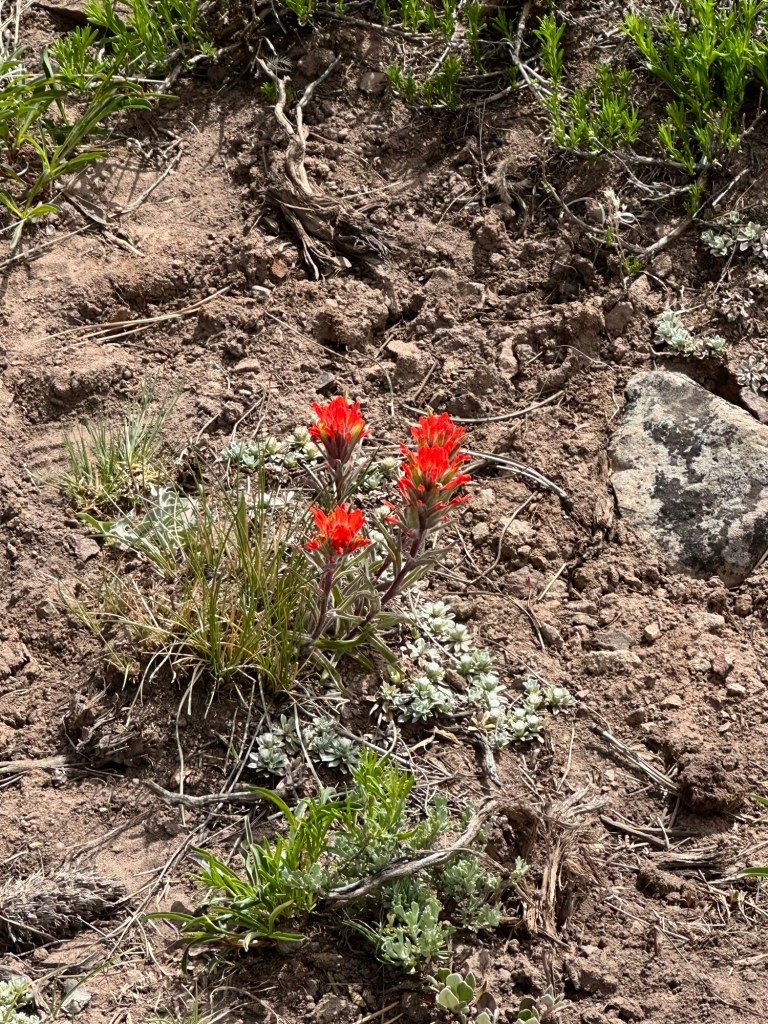
Good Isn’t Always Best

“Now the serpent was more crafty than any other beast of the field that the Lord God had made.

“He said to the woman, ‘Did God actually say, “You shall not eat of any tree in the garden”?’

“And the woman said to the serpent, ‘We may eat of the fruit of the trees in the garden, but God said, “You shall not eat of the fruit of the tree that is in the midst of the garden, neither shall you touch it, lest you die.”’ But the serpent said, ‘You will not surely die. For God knows that when you eat of it your eyes will be opened, and you will be like God, knowing good and evil. So when the woman saw that the tree was good for food, and that it was a delight to the eyes, and that the tree was to be desired to make one wise, she took of its fruit and ate, and she also gave some to her husband who was with her, and he ate. Then the eyes of both were opened, and they knew that they were naked. And they sewed fig leaves together and made themselves loincloths.

“And they heard the sound of the Lord God walking in the garden in the cool of the day, and the man and his wife hid themselves from the presence of the Lord God among the trees of the garden.” Genesis 3:1-8

“By faith Moses, when he was grown up, refused to be called the son of Pharaoh’s daughter, choosing rather to be mistreated with the people of God than to enjoy the fleeting pleasures of sin. He considered the reproach of Christ greater wealth than the treasures of Egypt, for he was looking to the reward.” Hebrews 11:24-26

Perfection. Lush surroundings, exquisite atmosphere, delectable food, an ongoing feast for every sense. Adam and Eve enjoyed intimate fellowship with their Creator in the Eden He’d personally prepared and pronounced ‘very good.’ While Eve had been warned about the knowledge of evil she would inherit by eating from the only forbidden tree, and the serpent himself acknowledged it, she allowed herself to be smitten by the ‘good’ of its fruit. (Genesis 1:26-31; 3:13)

Focus on the good. Think positively. The world entices with an incessant barrage of ‘goodness’ that’s foreign to God’s best. Danger lurks when the appealing and delicious and enjoyable blind us to what we must avoid. Sin’s sweetness is fleeting, leaving bitter taste and often irreversible consequences and rot. The attractive, crafty devil was condemned to a forever curse. (Genesis 3:14-15)

Because of the enemy’s marketing of all things ungodly, the casual mind might miss the pitfalls in the myriad of good choices offered. Untested in faith and untrained in the truth of the Word, we can fall for counterfeit promises and fall before counterfeit gods. The eye clouded with worldly glitz or fame’s glitter cannot see clearly behind the veneer of shallow success. There is no better way than the Lord’s.

Where are we falling for the devil’s allures? How keenly do we recognize the temptation of ‘good’, and how willing are we to say no to its fleeting pleasures? Where will we choose God’s best today?

Lord, help me never settle for less than Your best and glory.

Restore, don’t Ignore

“You shall not see your brother’s ox or his sheep going astray and ignore them. You shall take them back to your brother. And if he does not live near you and you do not know who he is, you shall bring it home to your house, and it shall stay with you until your brother seeks it. Then you shall restore it to him. And you shall do the same with his donkey or his garment, or any lost thing which [your brother] loses and you find; you may not ignore it. You shall not see your brother’s donkey or his ox fallen down by the way and ignore them. You shall help him to lift them up again.” Deuteronomy 22:1-4

The explanation of this law supposes brotherhood, attentiveness, and compassion. God’s people are to have special care for others made in His image, alert to what’s happening around them and exercising large hearts. The bother and potential expense of tending to a lost item or animal, and effort spent seeking its owner, are more important than getting on with personal responsibilities. The Lord cares about how His children care.

Going about daily life, we concern ourselves with many things. In doing so, we choose what to notice and get involved in, and dictate what to ignore or neglect. Ofttimes the press of urgent blinds us, or stress hardens us, to needs in our midst. Personal busyness precludes our ability to see people and things not in our priority path. God’s way is never to hurry or disregard, but to be cognizant and willing to help.

The prodigal’s father never stopped longing for his lost son and his return home. Through our foolish wandering, the Lord Jesus never stopped pursuing us in love. He cared all along to return us to our rightful home. He is a God concerned, and redemptive, and still goes out of His way to reconcile and restore. How about us? (Psalm 103:11-14; Isaiah 54:7-8; 55:6-7)

What areas of lost devotion or discipline are we neglecting? Whom are we ignoring who needs hope, reassurance, or restoration? Is our habit to close our eyes to what’s inconvenient, to turn our backs on the unattractive, or situations that yield us no return? With what cloak or donkey is God convicting us today of selfish priorities and callous hearts, and what will we do about it? How can I be forthright in bringing about relational and spiritual restoration among the lost, the bitter, the broken? (Galatians 6:1)

“Here I raise my Ebenezer;
hither by thy help I’m come;
and I hope, by thy good pleasure,
safely to arrive at home.
Jesus sought me when a stranger,
wandering from the fold of God;
he, to rescue me from danger,
interposed his precious blood.

O to grace how great a debtor
daily I’m constrained to be!
Let that grace now, like a fetter,
bind my wandering heart to thee.
Prone to wander, Lord, I feel it,
prone to leave the God I love;
here’s my heart; O take and seal it;
seal it for thy courts above.” ~Robert Robinson (1758)

Father, attune my eyes and desire with grace to others, and keep me ready, willing, and generous to make restoration as I can for others’ good and Your sake.

Love, the Verb

“I know your works, your toil and patient endurance, and how you cannot bear with those who are evil, but have tested those who call themselves apostles and are not, and found them to be false. I know you are enduring patiently and bearing up for my name’s sake, and you have not grown weary. But I have this against you, that you have abandoned the love you had at first. Remember therefore from where you have fallen; repent, and do the works you did at first. If not, I will come and remove your lampstand from its place… Yet this you have: you hate the works of the Nicolaitans, which I also hate. He who has an ear, let him hear.” Revelation 2:2-7

“Let love be genuine. Abhor what is evil; hold fast to what is good. Love one another with brotherly affection. Outdo one another in showing honor.” Romans 12:9-10

“Let us not love in word or talk but in deed and in truth.” 1 John 3:18

The church at Ephesus had a good attitude, and keen discernment between good and evil. They were patient, persevering steadfastly for Christ’s sake. They detested evil. Yet, their love had settled into a noun, a muted emotion, and had lost its vital display of practical, meaningful action. They’d abandoned its works, rendering themselves devoid of visible proof of any flicker of inward devotion.

How easily we misappropriate zeal and affection! In the bustle and busy of life we can mentally check off profession of love to God and man as a badge or duty, yet leave no time or heart room for proving deeds. Tangled in achievement and personal preferences, love becomes a meaningless byword. We fall from tending the lamp of sacrifice and implementing characteristics of Christ’s love to consumption in selfish pursuit, and God is not pleased.

He invites us to return. He calls us to remember our first love and fan back into flame that divine romance. He urges repentance, and renewed commitment to specific action that evidences our benevolent, grace-bought union. How promptly do we heed His call?

What does an honest assessment of our schedule, how we spend hours and resources and words, reveal about priorities of our loves? What do daily interactions with others and how we go about practical responsibilities tell of our affection for Christ and conformity to His character? (Romans 12:13; 1 Corinthians 13:4-7)

Whom do we profess to love, but leave those words unadorned by action? How willing are we to lay down our lives, dreams, petty wants, relished privacy, for the benefit and blessing of another? What specific deed that we do for others expresses genuine love? Can another say, having encountered us, I feel loved by Jesus? (John 15:13)

“Spirit of God, who dwells within my heart, 
wean it from sin, through all its pulses move. 
Cleanse my desires, my heart and strength and mind, 
and make me love you as I ought to love. 

Teach me to love you as your angels love, 
one holy passion filling all my frame: 
the fullness of the heaven-descended Dove; 
my heart an altar, and your love the flame.” ~George Croly (1854)

Lord, teach me practical, bountiful ways to express your Christlike love to all I encounter, for Your pleasure and glory.

The Ministry of Pleading

“Know, therefore,.. you are a stubborn people.  Remember and do not forget how you provoked the Lord your God to wrath in the wilderness… You have been rebellious against the Lord. At Horeb… the Lord was so angry with you that he was ready to destroy you…  [He] said to me, ‘Arise, go down quickly.., for your people… have acted corruptly… They have made themselves a metal image…

“‘Let me alone, that I may destroy them and blot out their name from under heaven…’ I looked, and you had… made yourselves a golden calf… So I took hold of the two tablets and threw them… and broke them before your eyes. Then I lay prostrate before the Lord… I neither ate bread nor drank water, because of all the sin that you had committed… I was afraid of the anger and hot displeasure that the Lord bore against you… But the Lord listened to me…

“So I lay prostrate before the Lord for these forty days and forty nights…  And I prayed, ‘O Lord God, do not destroy your people and your heritage, whom you have redeemed through your greatness, whom you have brought out of Egypt… Do not regard the stubbornness of this people, or their wickedness or sin, lest the land from which you brought us say, “Because the Lord was not able to bring them into the land that he promised them, and because he hated them, he has brought them out to put them to death in the wilderness.” For they are your people and your heritage, whom you brought out by your great power and by your outstretched arm.’” Deuteronomy 9:4-8,12,14,16-19,25-29

One of Moses’ most significant ministries among the people of God was his ongoing intercession for them. From reluctance to maturity as God’s leader of the nation, he grew through ongoing communion with his Sovereign. Over years and trials he deepened his understanding of how God worked and the facets of His character. He learned to love His honor and His people, however fickle and rebellious they were. (Exodus 4:10-13)

Prayer does that. Humbling ourselves before the Almighty, the Holy One, puts us in our place as His instrument. It reminds us of our smallness before His greatness, our fallibility and weakness before His perfection and might. Coming by His mercy reminds us to be merciful, and acknowledging His undeserved favor awakens graciousness in us toward others. (Job 1:5; Psalm 8:3-6; Matthew 6:12; Luke 18:13; Hebrews 4:15-16)

How vibrant is our ministry of pleading for others? Does our own secure salvation cause us to be smug and uncaring toward the lost, or regularly spur us to grief over rebel spirits and ignorance, compassion, desire for God’s holy intervention? How well do we try to understand their resistance or reluctance? Would we ask God for a heart like His for their souls?

Whom has the Lord placed alongside us in workplace or neighborhood for whom there may be no other to plead? What evidence do we display, visibly or in the private place, that we care deeply and personally for their eternal state, and are concerned that God’s honor be known? The Lord hears the powerful, effectual prayers of His people. When and for whom will I prostrate myself and plead today? (Psalm 34:17; 138:3; Jeremiah 33:3; James 5:16)

Loving Father, compel me to passionate, merciful pleading for the lost, seeking You and Your highest and best for their sake and Your glory.

How High is On High?

“Praise the Lord!
Praise, O servants of the Lord,
    praise the name of the Lord!

Blessed be the name of the Lord
    from this time forth and forevermore!
From the rising of the sun to its setting,
    the name of the Lord is to be praised!

The Lord is high above all nations,
    and his glory above the heavens!
Who is like the Lord our God,
    seated on high,
who looks far down
    on the heavens and the earth?” Psalm 113:1-6

“I saw the Lord sitting upon a throne, high and lifted up… Above him stood the seraphim… one called to another:

‘Holy, holy, holy is the Lord of hosts;
the whole earth is full of his glory!'” Isaiah 6:1-3

God on high looks far down on heavens and earth, a reality impossible to grasp. Seeing the Lord high and lifted up compels awe-filled, humble praise. Whatever heights man fathoms and describes, He is higher, residing and ruling above what is seen and known. Imagine the edges of conscious comprehension, and He is beyond. To acknowledge God on high is to trust in His overarching reign and keeping.

‘On’ supposes the bearing of volume and heft. The Creator of the measureless expanse of heaven and earth has also imparted their capacity to uphold His awesome majesty. The One infinitely weighty in grandeur, glory, and power, and sustains His universe, is Himself upheld by His heavens. We must marvel! (Colossians 1:16-17)

Along our way and rhythms of each day, the uneven path takes concentration and surroundings distract at every turn. Glances left and right, nagging from behind and choices ahead contribute to easily forgetting to look up and take note of our heavenly Companion. Does our busy tending to present details keep us from considering Who resides above them all?

On what do we regularly focus? Is our gaze dictated by the urgent we’ve determined, or the onslaught of outside allure and influence? When nations and people rage, or fears assail or sorrows choke, or demands press in and temptations attract, do we consider the One on high? He is far superior in goodness, satisfaction, and protection than anything on earth. His righteousness is perfect, His thoughts lofty, His might supreme. He scatters beauty abroad for us to enjoy, yet He on high is the most resplendent of all.

How high is my Lord to me, how preeminent His throne in my life? Have I limited my view, and therefore my understanding and worship, of Him by finite human measures? What needs to change in mindset and practice so I regularly consider and behold the infinite One high and lifted up? When do I turn my face from what’s before me to gaze up at Him who sees and rules the affairs of my life and the wide world? In doing so I’m rightly positioned to trust and praise.

“O soul, are you weary and troubled?
No light in the darkness you see?
There’s light for a look at the Savior,
And life more abundant and free!
Turn your eyes upon Jesus,
Look full in His wonderful face,
And the things of earth will grow strangely dim,
In the light of His glory and grace.” Helen Lemmel (1922)

Lord, turn my eyes upward to gaze at, exalt, and praise You always.

My House… for All People

“Let not the foreigner who has joined himself to the Lord say,
    ‘The Lord will surely separate me from his people’;
and let not the eunuch say,
    ‘Behold, I am a dry tree.’
For thus says the Lord:
‘To the eunuchs who keep my Sabbaths,
    who choose the things that please me
    and hold fast my covenant,
I will give in my house and within my walls
    a monument and a name
    better than sons and daughters;
I will give them an everlasting name
    that shall not be cut off.

“’And the foreigners who join themselves to the Lord,
    to minister to him, to love the name of the Lord,
    and to be his servants,
everyone who keeps the Sabbath and does not profane it,
    and holds fast my covenant—
these I will bring to my holy mountain,
    and make them joyful in my house of prayer;
their burnt offerings and their sacrifices
    will be accepted on my altar;
for my house shall be called a house of prayer
    for all peoples.’
The Lord God,
    who gathers the outcasts of Israel, declares,
‘I will gather yet others to him
    besides those already gathered.’”

“He who takes refuge in me shall possess the land
    and shall inherit my holy mountain.

“It shall be said,
‘Build up, build up, prepare the way,
    remove every obstruction from my people’s way.’
For thus says the One who is high and lifted up,
    who inhabits eternity, whose name is Holy:
‘I dwell in the high and holy place,
    and also with him who is of a contrite and lowly spirit,
to revive the spirit of the lowly,
    and to revive the heart of the contrite.'” Isaiah 56:3-8; 57:13b-15

Isaiah propounds a high view of God in every vignette depicted. He also brings to light the folly and distance of man apart from Him. Repeatedly he draws the two together with messages of the Sovereign’s love and mercy extending invitation to all who would hear, and come. His is a house with wide walls that gathers outcasts and welcomes spiritual foreigners to become His children. Far or near, high or low, every contrite worshiper can take refuge there.

In provincial living within my small space surrounded by my people motivated by my passions tending to my responsibilities, it’s natural not to entertain thought of a broader world. We move about in measured margin, and often miss the majesty of God’s true family. Limited thinking and experience limits understanding of the scope of His heavenly abode.

The infinite Lord’s expansive love and far-reaching highways don’t figure in a narrow focus and nationalistic mindset. He is Lord of the world, with ways beyond our comprehension. His plans for the salvation of His people everywhere are spacious, and cannot be thwarted. (Job 42:2; Psalm 36:5-6; Isaiah 55:8-9)

How grateful are we to be counted among the contrite and lowly God revives with grace? Will we pray to hone His divine, eternal perspective on the world? What part do we play in bringing all people to the Lord’s house? Whom are we regularly inviting, gathering together, telling of His wonders and ways? (Deuteronomy 31:12-13; 32:2-3)

Lord, give me eyes to see and delight in Your wide world, and a heart to welcome many to Your large love and mercy.

Numbered Days, Eternal Ways

“Lord, you have been our dwelling place
    in all generations.
Before the mountains were brought forth,
    or ever you had formed the earth and the world,
    from everlasting to everlasting you are God.

You return man to dust
    and say, ‘Return, O children of man!’
For a thousand years in your sight
    are but as yesterday when it is past,
    or as a watch in the night.

You sweep them away as with a flood; they are like a dream,
    like grass that is renewed in the morning:
in the morning it flourishes..;
    in the evening it fades and withers.

For we are brought to an end by your anger…
You have set our iniquities before you,
    our secret sins in the light of your presence.

For all our days pass away under your wrath;
    we bring our years to an end like a sigh.
The years of our life are seventy,
    or even by reason of strength eighty;
yet their span is but toil and trouble;
    they are soon gone, and we fly away…

So teach us to number our days
    that we may get a heart of wisdom…
Satisfy us in the morning with your steadfast love,
    that we may rejoice and be glad all our days.
Make us glad for as many days as you have afflicted us,
    and for as many years as we have seen evil.
Let your work be shown to your servants,
    and your glorious power to their children.
Let the favor of the Lord our God be upon us,
    and establish the work of our hands upon us;
    yes, establish the work of our hands!” Psalm 90:1-10,12,14-17

Moses understood the grand distinction between God’s eternal and man’s transient natures. This timeless Creator, infinite and wholly God from everlasting to everlasting, was the exquisite abode for man stained by the fall and limited in days. His all-encompassing sovereignty ordered and measured the finite years of His children, and Moses longed to make the most of them with wisdom and meaningful work. Under God’s favor and establishing, he could be satisfied in Him and rejoice in His ways.

In the stress and push of daily life, we can forget our place in generations and eternity. Satan’s potent ruse is to blind man to eternal significance and accountability, to cause the urgent and temporary to be most vital and all-consuming. Days can speed by without our taking thought of God’s mercies each morning and His gift of rest and renewal every night. We go about the grind of work without considering how it fits into His larger kingdom scheme or even bears on His honor. Years can pass without our thanking Him for His faithful sustenance and the continuity of life through births and deaths. (Lamentations 3:22-23)

When we recognize He has been our dwelling place, above and upholding all things, we can see our days in a glorious continuum of His ways, and delight to take part. How can we add wisdom and significance to our moments and hours? What will we invest anew to make the most of every conversation, duty, and service to others? What fresh joy will we take in God our dwelling place? (Colossians 1:16-17)

Lord, may I flourish and bear fruit all my days, to Your glory. (Psalm 92:12-14)

Get You Up to a High Mountain!

“Comfort, comfort my people, says your God.
Speak tenderly to Jerusalem,
    and cry to her
that her warfare is ended,
    that her iniquity is pardoned,
that she has received from the Lord’s hand
    double for all her sins.

“A voice cries:
‘In the wilderness prepare the way of the Lord;
    make straight in the desert a highway for our God.
Every valley shall be lifted up,
    and every mountain and hill be made low;
the uneven ground shall become level,
    and the rough places a plain.
And the glory of the Lord shall be revealed,
    and all flesh shall see it together,
    for the mouth of the Lord has spoken…’

“Go on up to a high mountain,
    O Zion, herald of good news;
lift up your voice with strength,
    O Jerusalem, herald of good news;
    lift it up, fear not;
say to the cities of Judah,
    ‘Behold your God!’
Behold, the Lord God comes with might,
    and his arm rules for him;
behold, his reward is with him,
    and his recompense before him.
He will tend his flock like a shepherd;
    he will gather the lambs in his arms;
he will carry them in his bosom,
    and gently lead those that are with young…

“Have you not known? Have you not heard?
The Lord is the everlasting God,
    the Creator of the ends of the earth.
He does not faint or grow weary;
    his understanding is unsearchable.
He gives power to the faint,
    and to him who has no might he increases strength.
Even youths shall faint and be weary,
    and young men shall fall exhausted;
but they who wait for the Lord shall renew their strength;
    they shall mount up with wings like eagles;
they shall run and not be weary;
    they shall walk and not faint.” Isaiah 40:1-5,9-11,28-31

Isaiah has a message of deep comfort for God’s people, and calls others to share his good news. Anticipate the Lord’s glorious coming- prepare for it! And herald His presence so He is seen, desired, and welcomed! Behold this Lord God in all His compassion, strong tenderness, justice, and bounty. Wonder at His might, His vast influence and wisdom, His ability to create, raise up, destroy, and uphold. This God knows you, meets every need, renews your strength. Get you up a high mountain and tell! (Isaiah 40:12-17,21-26)

In order to have a message we need to have an experience to relate. Investing in knowing God through His word and the daily practice of obedience, trusting, applying biblical principles, and walking in His promises, stores up spiritual treasure to share. The truths of God inform our thought, and facets of His character become ours to emulate. How deeply and genuinely is the good news our own?

Whom are we telling? From what mountain in our neighborhood, at work, in a leadership role, in ordinary interactions, are we proclaiming the gospel of Christ? Would we set aside reluctance, excuses, fears, and lift our voices? (Isaiah 41:8-10,13,18)

“Go, tell it on the mountain,
over the hills and ev’rywhere;
go, tell it on the mountain
that Jesus Christ was born.” John Work (1872-1925)

Lord, take me to the heights and open my eyes to Your greatness, my heart to Your graces, and my mouth to proclaim Your glories.

Mere Words, Men, and the Word

“In the fourteenth year of King Hezekiah, Sennacherib king of Assyria came up against all the fortified cities of Judah and took them. And the king of Assyria sent the Rabshakeh from Lachish to Hezekiah at Jerusalem, with a great army… And there came out to him Eliakim… and Shebna the secretary, and Joah.., the recorder.

“The Rabshakeh said, ‘Say to Hezekiah, “Thus says the great king… of Assyria: On what do you rest this trust of yours? Do you think that mere words are strategy and power for war? In whom do you now trust, that you have rebelled against me?If you say to me, ‘We trust in the Lord our God,’ is it not he whose high places and altars Hezekiah has removed, saying to Judah and to Jerusalem, ‘You shall worship before this altar’?Is it without the Lord that I have come up against this land to destroy it? The Lord said to me, ‘Go up against this land and destroy it…’”’

“Then the Rabshakeh stood and called out in a loud voice… ‘Hear the words of the great king, the king of Assyria!.. Do not let Hezekiah deceive you, for he will not be able to deliver you. Do not let Hezekiah make you trust in the Lord by saying, “The Lord will surely deliver us. This city will not be given into the hand of the king of Assyria.” Do not listen to Hezekiah. For thus says the king of Assyria: Make your peace with me and come out to me. Then each one of you will eat of his own vine, and each… his own fig tree, and each… will drink the water of his own cistern, until I come and take you away to a land like your own land, a land of grain and wine, a land of bread and vineyards. Beware lest Hezekiah mislead you by saying, “The Lord will deliver us.”'” Isaiah 36:1-5,7,10,13-18a

The Rabshekah from Assyria made bold claims against God, and for his own pompous power. This conniving high ranking military officer did all he could to undermine Hezekiah and Israel’s trust in the Lord. Not understanding the power of the invisible, living God left him sauntering and positioning himself as the only victor. Hezekiah knew better. He trusted not in empty or threatening words, but the true Word of his Lord. It was Him he sought and trusted for deliverance. (Isaiah 37:1-20)

Many voices turn our heads, confuse convictions, and vie for our allegiance. When we face difficulties and temptation, seasons of pressure, challenge, or trial, where do we turn for clarity and victory? Are we swayed by emotions triggered by mere words, or the suggestions of men? Or do we measure these messages against the Word?

How will we know better and stand more firmly on God’s truth when taunted? What daily practices can we implement to establish ourselves against attempted enemy deception? The Lord alone is sure and true.

“How firm a foundation, ye saints of the Lord,
is laid for your faith in God’s excellent Word!
What more can be said than to you God hath said,
to you who for refuge to Jesus have fled?” ~R. Keen (1787)

Lord, give me wisdom to discern truth and boldness to stand for it.

Gladness in the Wilderness?


“The wilderness and the dry land shall be glad;
the desert shall rejoice and blossom like the crocus;
it shall blossom abundantly
and rejoice with joy and singing.
The glory of Lebanon shall be given to it,
the majesty of Carmel and Sharon.
They shall see the glory of the Lord,
the majesty of our God.

“Strengthen the weak hands,
and make firm the feeble knees.
Say to those who have an anxious heart,
‘Be strong; fear not!
Behold, your God
will come with vengeance,
with the recompense of God.
He will come and save you.’

“Then the eyes of the blind shall be opened,
and the ears of the deaf unstopped;
then shall the lame man leap like a deer,
and the tongue of the mute sing for joy.
For waters break forth in the wilderness,
and streams in the desert;
the burning sand shall become a pool,
and the thirsty ground springs of water;
in the haunt of jackals, where they lie down,
the grass shall become reeds and rushes.

“And a highway shall be there,
and it shall be called the Way of Holiness;
the unclean shall not pass over it.
It shall belong to those who walk on the way;
even if they are fools, they shall not go astray.
No lion shall be there,
nor shall any ravenous beast come up on it;
they shall not be found there,
but the redeemed shall walk there.
And the ransomed of the Lord shall return
and come to Zion with singing;
everlasting joy shall be upon their heads;
they shall obtain gladness and joy,
and sorrow and sighing shall flee away.” Isaiah 35:1-10

What hope-filled words the prophet spoke to a nation familiar with the wilderness, enemy lands and opposition, weakness and anxiety. They really could take heart? Isaiah seemed to understand their feebleness, their blindness to what was ahead, the silence of waiting for a word, the destitution of thirst and burning sand and being hunted, haunted. Could they take hope in this substantial promise of God’s coming, His recompense, His making all things right?

Few would choose a wilderness. We chafe at its hard scratch, bemoan its misery and fright, see it as punishment, or cause for complaint. Yet the certainty of Christ in the midst and as deliverer brings color to the most destitute situation and barren outlook. Against the backdrop of the desert His grace blooms, against the howl of the predator His song is heard. Are we looking? Listening?

What arid circumstances are depleting spiritual vitality? Have we given up on a way forward because we’re too focused on present misery, relational thirst, unfulfilled dreams, disappointments? Would we choose to hold to the bloom of God’s promises, commit them to heart and rejoice?

Whom do we know in a wilderness of soul, and how might we minister hope? In what specific ways will we pray for their mindset, or lead them- by listening or a gentle word- to the Highway of Holiness where they’re forever held, and secure? How can we lovingly point out the contrast and choice between sighing and singing? (John 10:28-29)

Lord, please turn any jadedness to joy, and keep me gladly sharing Your hope in every God-ordained wilderness, to Your glory.