Outside the Camp

“He shall carry the bull outside the camp and burn it up as he burned the first bull; it is the sin offering for the assembly.” “He is a leprous man, he is unclean. The priest must pronounce him unclean. The leprous person who has the disease shall wear torn clothes and let the hair of his head hang loose, and he shall cover his upper lip and cry out, ‘Unclean, unclean.’ He shall remain unclean as long as he has the disease. He is unclean. He shall live alone. His dwelling shall be outside the camp.” “Bring out of the camp the one who cursed, and let all who heard him lay their hands on his head, and let all the congregation stone him.” “They put him in custody, because it had not been made clear what should be done to him. And the Lord said to Moses, ‘The man shall be put to death; all the congregation shall stone him with stones outside the camp.’ And all the congregation brought him outside the camp and stoned him to death with stones, as the Lord commanded Moses.” Leviticus 4:21; 13:44-46; 24:13-14; Numbers 15:34-36

For the bodies of those animals whose blood is brought into the holy places by the high priest as a sacrifice for sin are burned outside the camp. So Jesus also suffered outside the gate in order to sanctify the people through his own blood. Therefore let us go to him outside the camp and bear the reproach he endured.” Hebrews 13:11-13

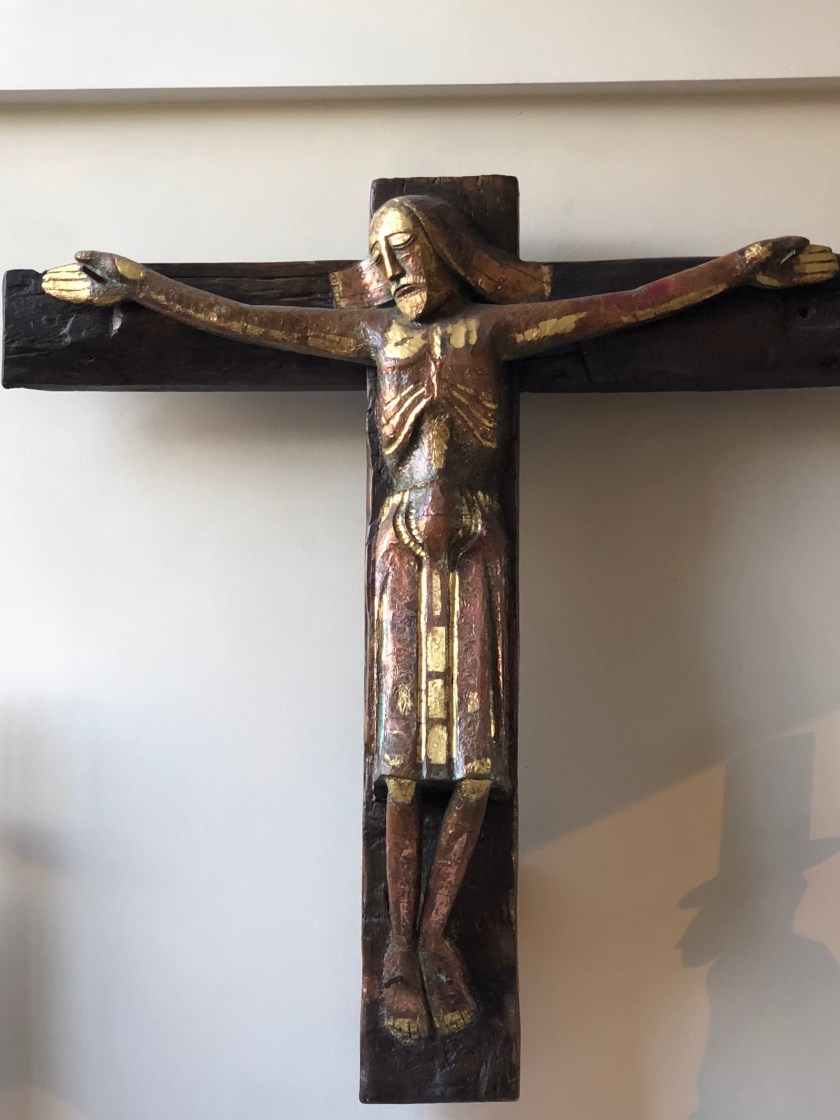
Inside the camp was belonging, identity with God’s people, communion. Outside the camp were the burned sacrifices for sin, the unclean, the criminals, shame and isolation and punishment. In the Old Testament, banishment outside the camp was a cruel curse for the banished and corrupt, a protection for God’s people inside.
EA85A3DF-C70D-49CF-9115-09DB101F8987_1_201_a

Then came our Jesus, the Lamb of God who takes away the sin of the world. The Perfect Insider became the perfect sacrifice. The sinless One bore our sins on the cross. He took in Himself our curse and punishment. He walked the road outside the camp to be crucified so we could be let in and secure forever. Curse for cleansing, penalty for forgiveness, death for life. What a Savior! (Isaiah 53:4-6; Matthew 27:32-33; John 1:29; Galatians 2:20; 1 Peter 2:24)

What shame do I carry? Jesus carried it to Calvary. What sins burden, what guilt nags and eats away at inner peace? He finished their curse on the cross. What relationships are scarred by isolation, bitterness, misconception or misunderstanding? Where do I feel cast out? Our Redeemer was broken that we might be healed, restored, and unified. When we meet Him outside the camp and bow under the cleansing blood, He begins His glorious work of sanctification in every crevice. (John 17:11; 19:30; Hebrews 12:2)

“When I survey the wondrous cross
On which the Prince of glory died,
My richest gain I count but loss,
And pour contempt on all my pride.

Forbid it, Lord, that I should boast,
Save in the death of Christ my God!
All the vain things that charm me most,
I sacrifice them to His blood.”  ~Isaac Watts (1707)

My Lord and Great High Priest, get me up and willing to join You outside the world’s camp, and bring others to Your Cross.

 

Lay Down Life for Life

The thief comes only to steal and kill and destroy. I came that they may have life and have it abundantly. I am the good shepherd. The good shepherd lays down his life for the sheep. He who is a hired hand and not a shepherd, who does not own the sheep, sees the wolf coming and leaves the sheep and flees, and the wolf snatches them and scatters them. He flees because he is a hired hand and cares nothing for the sheep.

“I am the good shepherd. I know my own and my own know me, just as the Father knows me and I know the Father; and I lay down my life for the sheep. And I have other sheep that are not of this fold. I must bring them also, and they will listen to my voice. So there will be one flock, one shepherd. For this reason the Father loves me, because I lay down my life that I may take it up again. No one takes it from me, but I lay it down of my own accord. I have authority to lay it down, and I have authority to take it up again. This charge I have received from my Father.” John 10:10-18

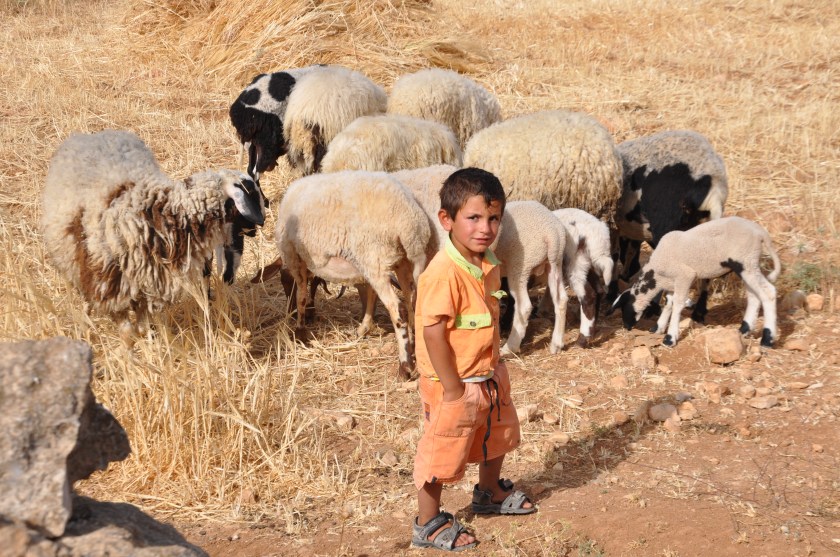
The dichotomy of giving life for life becomes clear by both illustration and reality with Jesus. We picture a shepherd walking, leading, and with his staff and dogs herding dumb sheep to grass, water, and shelter. But Jesus repeatedly describes Himself as the good shepherd who “lays down his life for the sheep,” five times in eight verses. In the East, shepherds would guide sheep into pens at night, and literally lie down across the opening to guard them from wolves or thieves, thus ‘laying down their lives’ for the lives of their own.

A0F14A86-2762-4A70-9D72-AC7FEEB48585

Jesus’s sheep, His children, are so valuable to Him that He loves them to death. He literally lays down His life for our sake and on our behalf so we can own life abundant. Who but God does that? He is perfect in love and perfectly our substitute. We are the ones deserving death, our sins have stained our lives beyond repair, but God, rich in mercy, intervened by sending Jesus to die in our place. The wages of our sin is death, but Jesus paid those wages in our stead by dying Himself to free us unto life eternal. What wondrous love! (John 3:16; Romans 3:23-25; 6:23; Ephesians 2:4-8; 1 John 2:2)

So how will I treat my own life in response? Do I spend my energy and resources to protect it, to sequester into my safety and comfort, or do I actively look for ways to offer it for my Lord and His children? How willing am I to set aside my preferences, ease, security, and pleasures for the benefit or upbuilding, or to fulfill the needs of, another? Who around me hungers for a note, a call, a meal, a word of true life?

Lord God, give me Your eyes and ears, Your arms of love and words of hope, to all who need Your life today. Out of love and gratitude for Your life laid down for me, I lay down mine to glorify You. (1 Corinthians 6:20)

The Pilate in Me

Pilate [asked], ‘What accusation do you bring against this man?’ They answered, ‘If this man were not doing evil, we would not have delivered him over to you.’ So Pilate entered his headquarters again and said to [Jesus], ‘Are you the King of the Jews?.. What have you done?’  Jesus answered, ‘My kingdom is not of this world.’ Then Pilate said, ‘So you are a king?’ Jesus answered, ‘I have come into the world—to bear witness to the truth.’ Pilate said to him, ‘What is truth?’ He went back outside to the Jews and told them, ‘I find no guilt in him.’ 

“Then Pilate took Jesus and flogged him… The chief priests and officers cried out, ‘Crucify him!’ Pilate said, ‘Crucify him [yourselves], for I find no guilt in him.’ The Jews answered, ‘According to [our] law he ought to die because he has made himself the Son of God.’ When Pilate heard this statement, he was even more afraid.

From then on Pilate sought to release him,.. for he knew that it was out of envy that they had delivered him up. Besides, while he was sitting on the judgment seat, his wife sent word to him, ‘Have nothing to do with that righteous man, for I have suffered much because of him today in a dream.’  But the Jews cried out, ‘If you release this man, you are not Caesar’s friend.’ So Pilate brought Jesus out and… said, ‘Shall I crucify your King? Why? I have found in him no guilt deserving death.’ But they were urgent, demanding with loud cries that he should be crucified. And their voices prevailed. So Pilate decided that their demand should be granted.” John 18:29-30,33,35-38; 19:1,6-8,12-15; Matthew 27:18-19; Luke 23:22-24

Though he had no evidence for, and several specific warnings and divine evidence against, Pilate chose to have Jesus crucified. The crowd’s shouting held greater sway than Jesus’s words. We judge him as weak, and pity his crowd-pleasing, but where is our guilt?

7AA7D7AE-C529-4968-B8E8-DDF3E799BFF7_1_201_a

Every day we choose how to treat Jesus. We put Him on trial in our thinking and behaving. We accuse Him of cruelty or injustice when He withholds what we want or think we need. We judge as malevolent His way of doing business when it includes suffering, or waiting. In conversation, we fret and fear, and so cast doubt on His love, faithfulness, and goodness. We say He’s King, but resist His rule and fear surrender and what it might require. We say we trust God, but allow the incessant vocal ‘crowd’ of news and opinion to undermine His majesty and rightful authority over all things seen and unseen.

When presented with Jesus, how do we respond? If He is really divine and holds all authority, are we trusting Him with all aspects of our life? Is our fear of man or disease or loss greater than our reverent fear of the Almighty? Where are we weak like Pilate? Are we bold enough to ask Jesus to reveal our vulnerable places, then act on the truth? (John 19:21-22)

O Lord, may I courageously live what I believe about You. Guard me from fear of the crowd or any voice except Yours. Keep me fearing and revering You alone and above all.


Blow, Spirit, Blow!

 And when he got into the boat, his disciples followed him. And behold, there arose a great storm on the sea, so that the boat was being swamped by the waves; but he was asleep. And they went and woke him, saying, ‘Save us, Lord; we are perishing.’ And he said to them, ‘Why are you afraid, O you of little faith?’ Then he rose and rebuked the winds and the sea, and there was a great calm.” Matthew 8:23-26

“Immediately he made the disciples get into the boat and go before him to the other side. He went up on the mountain by himself to pray… but the boat by this time was a long way from the land, beaten by the waves, for the wind was against them. And in the fourth watch of the night he came to them, walking on the sea. Jesus spoke to them, saying, ‘Take heart; it is I. Do not be afraid.'” Matthew 14:22-25,27

“The wind blows where it wishes, and you hear its sound, but you do not know where it comes from or where it goes. So it is with… the Spirit.” “He breathed on them and said, ‘Receive the Holy Spirit.'” John 3:8; 20:22

It stormed last night, wind whipping sheets of rain like an angry laundry maid. Wherever the birds hid then, they are liberated this morning, raising a glad timbrel of song as leaves and fronds continue their swish and sway, and water runs dimpled. The same wind that lashes the rain is the one that blows it on and freshens the morning after. And so it is with the Holy Spirit.

BFBA70CD-A095-47A7-8365-97EC6B8EC5EF_1_201_a

As the Spirit leads us into storms, and hems us in even as tempests spit and blow and soak, He breathes in us His holy breath all through and to the other side, never ceasing His movement and ministry of power in our lives.

Sometimes, the gale of circumstances overwhelms, overthrowing our plans and threatening to disrupt our peace. The same Jesus who deliberately sent His disciples into the night’s unseen, pending storm under His watchful eye, is the One who orders such tempests for us. Through the lash of pain and uncertainty He reminds us of His prayer for us, His certain and calm presence with us, and that all forces with which we contend have no match in His power. His Spirit goes before us and hems us in behind, and He will see us through. (Psalm 139:5,7-12; Romans 8:31,34)

“I feel the winds of God today;
today my sail I lift,
though heavy oft with drenching spray
and torn with many a rift;
if hope but light the water’s crest,
and Christ my bark will use,
I’ll seek the seas at his behest,
and brave another cruise.”  ~Jessie Adams (1863-1954)

Lord, Living Spirit, blow! In these stormy times, blow into and all around me Your grace to rejoice, Your strength to withstand, Your love to share. Keep blowing Your glory that the sleeping may awaken, the blind see, the hardened understand and know that You are God, there is none other. (Isaiah 45:5)

Littered with Blossoms

And Jonathan, Saul’s son, rose and went to David at Horesh, and strengthened his hand in God. And he said to him, ‘Do not fear.'” “Whoever brings blessing will be enriched, and one who waters will himself be watered.” Gracious words are like a honeycomb, sweetness to the soul and health to the body.” The fruit of the Spirit is love, joy, peace, patience, kindness, goodness, faithfulness, gentleness, self-control.” 1 Samuel 23:16-17; Proverbs 11:25; 16:24; Galatians 5:22-23

I do not cease to give thanks for you, remembering you in my prayers, that the God of our Lord Jesus Christ, the Father of glory, may give you the Spirit of wisdom and of revelation in the knowledge of him, having the eyes of your hearts enlightened, that you may know what is the hope to which he has called you, what are the riches of his glorious inheritance in the saints and what is the immeasurable greatness of his power toward us who believe.” Let brotherly love continue. Do not neglect to show hospitality… Do not neglect to do good and to share what you have, for such sacrifices are pleasing to God. Pray for us.” Ephesians 1:16-19; Hebrews 13:1-2,16,18

Gliding along this morning, I could not help but smile at the fuchsia blossoms littering the cool, blue-green surface. Wind from last night had fingered bougainvillea at the cove’s edge and strewn its blooms extravagantly across the water, dotting the early hour with bright cheer. ‘I want to do that today,’ I thought, ‘Litter lives with blossoms.’

C4D5AD00-C391-4C6F-9E38-898492220899_1_201_a

There are many small things that we can do to add cheer and color to others’ lives. Give a smile. Send a message that says I am thinking of you and thankful for you today. Offer a written or spoken prayer over them. place at their front door a bag of cookies, tomatoes or herbs from the garden, a bowl of strawberries, a jelly jar of flowers from the yard. When we get caught in the sticky web of self-interest or pity, we cut off the creative flow for others. Love meant for them gets bottled up for self, and grows stale; it’s not meant to be hoarded.

So how will I, this day, strengthen another’s hand, as Jonathan did for David? With whom will I share a calming word, specific encouragement, or a message that sweetens their soul? How am I watering to help others be refreshed, be strengthened, and grow? In what specific ways am I praying for and contributing to meet their needs? Are there imaginative ways to extend hospitality, even when we are separated physically– a welcoming ear and heart? A shared walk or meal by phone? A feast of love, care, interest?

Lord, You have strewn our days with Your glory, showing forth Your love for us in the beauties You display. Help me to scatter Your love abroad, to litter the lives of those around me with blossoms that reflect Your loveliness and grace. (Romans 5:5)

What To Do with Offenses

Hatred stirs up strife, but love covers all offenses.” Good sense makes one slow to anger, and it is his glory to overlook an offense.” Proverbs 10:12; 19:11

Love is patient and kind… It is not irritable or resentful… Love bears all things, believes all things, hopes all things, endures all things.” I entreat Euodia and I entreat Syntyche to agree in the Lord. Yes, I ask you also, true companion, help these women, who have labored side by side with me in the gospel together.” 1 Corinthians 13: 4-5,7; Philippians 4:2-3

Inward focus, where self is central, taints our perspective of events and words, and results in selfish (and flawed) responses to them. When we are guardians of our rights, and driven by feelings, we are disabled from seeing honest intent and extending others the benefit of the doubt. In our day, “Euodia” and “Syntyche” can be pronounced “you’re odious” and “so touchy,” ne’er to get along or agree. Over the years, our culture has fomented suspicion and rage among people by heightening the preeminence of feeling and emotion over reason, truth, and good will.

C3BEA8EC-1B9E-480D-A1D1-0167BF1DF90D

Offenses unchecked become ugly fences that block us off from decency and free-flowing munificence toward others. When erected, they close off reason and close us in to defend ourselves and nurse perceived ‘wounds.’ We resist hurt, and blame anyone but ourselves for rifts. We get irritated, chafed, and stung, and rather than guarding against mental rabbit trails of resentment, we construct guards rails against any opposing opinion or edification. We use words like ‘bullied,’ ‘offended,’ ‘put off,’ instead of employing a vocabulary of grace and openness to seek true meaning and intentions. We shut off dialogue instead of making effort to communicate constructively and with civility, to redeem misunderstandings, to heal hurts, to make peace.

Where has touchiness overruled sensible responses, and compelled us to exaggerate the meaning of what someone said or did? Where has prideful self-defense caused us to wrongly accuse motives behind someone’s actions, painting them with guilt, holding them culpable for our discomfort? Why do we even choose to be offended instead of looking benevolently for the best in another? Where have I refused to consider that someone else who has a different perspective might actually have a reasonable point? What will I do to affirm value of the person, even if I do not agree with his opinion? How can we change our vocabulary to promote charity? (Matthew 7:1; Ephesians 4:32; Philippians 2:3-4; Hebrews 12:15)

When will we deconstruct the offenses we coddle and the fences we build? What steps will we initiate to turn from combat and link arms in redemptive resolve to move ahead for a larger good? (Proverbs 17:9)

Father, check and convict any hint, even a subconscious impulse, that life is all about me. So fill me with genuine love and generous gratitude that any offense is obliterated by my remembering, and applying, Your cross. (Isaiah 53:4-7; Romans 4:25)


So Will I Sing

The heavens declare the glory of God,
    and the sky above proclaims his handiwork.
Day to day pours out speech,
    and night to night reveals knowledge.
There is no speech, nor are there words,
    whose voice is not heard.
Their voice goes out through all the earth,
    and their words to the end of the world.” Psalm 19:1-4

“Praise the Lord!
Praise the Lord from the heavens;
    praise him in the heights!

Praise him, sun and moon,
    praise him, all you shining stars!
Praise him, you highest heavens,
    and you waters above the heavens!

Let them praise the name of the Lord!
    For he commanded and they were created.
And he established them forever and ever;
    he gave a decree, and it shall not pass away.[a]

Praise the Lord from the earth,
    you great sea creatures and all deeps,
fire and hail, snow and mist,
    stormy wind fulfilling his word!

Mountains and all hills,
    fruit trees and all cedars!
Beasts and all livestock,
    creeping things and flying birds!

Kings of the earth and all peoples,
    princes and all rulers of the earth!
Young men and maidens together,
    old men and children!

Let them praise the name of the Lord,
    for his name alone is exalted;
    his majesty is above earth and heaven.” Psalm 148:1,3-13

Three stars, one the brighter leader of the twins perfectly placed behind, shine glory to the One who made, named, and sustains them. Birds fill the cool air with trills, chirps, cheery whoops and tweets. Palm fronds softly whish, strummed by wind that carries the intoxicating fragrance of gardenia blossoms. Profuse orchids cascade gracefully, with snowy splendor, from tree branches. A rose-tinted grey splotch of cloud slowly dissolves in dawn’s increasing light, adding music to the voluminous symphony of praise this morning. Even the wind chimes, man-designed and crafted from earth’s metal, add their harmony to the rejoicing fresh air. My heart leaps to join the exaltation.

For by him all things were created, in heaven and on earth, visible and invisible, whether thrones or dominions or rulers or authorities—all things were created through him and for him. And in him all things hold together.” Colossians 1:16-17

We are each one part of this creation that exists through and for Jesus. He who gave us life calls us to sing ongoing praise with every breath. We see, hear, smell, feel, taste the praise of all around us. How will we add to the orchestra in extolling our mighty, worthy Creator? (Isaiah 43:7; Hebrews 1:3)

What sounds of cheer or gentleness, words of hope, encouragement, or consolation for others, or melodies of rejoicing will I sing? What color and sweet fragrance do I add to conversation and the atmosphere of my home or space? How will I bless my Lord by adorning His reputation, radiating His love, spreading His grace, exclaiming His favor, promoting His worth? In what specific ways do I shine and spread abroad His excellencies, that others recognize His greatness? (1 Corinthians 14:3; 2 Corinthians 2:15-16; Colossians 3:16)

My Lord Christ, daily tune my heart to sing unceasingly, through all my moments, to the praise of Your glory.

Lives Change

He entered Jericho and was passing through. And behold, there was a man named Zacchaeus. He was a chief tax collector and was rich. And he was seeking to see who Jesus was, but on account of the crowd he could not, because he was small in stature. So he ran on ahead and climbed up into a sycamore tree to see him, for he was about to pass that way. And when Jesus came to the place, he looked up and said to him, ‘Zacchaeus, hurry and come down, for I must stay at your house today.’ So he hurried and came down and received him joyfully. And when they saw it, they all grumbled, ‘He has gone in to be the guest of a man who is a sinner.’ And Zacchaeus stood and said to the Lord, ‘Behold, Lord, the half of my goods I give to the poor. And if I have defrauded anyone of anything, I restore it fourfold.’ And Jesus said to him, ‘Today salvation has come to this house. For the Son of Man came to seek and to save the lost.’” Luke 19:1-10

When God grabs a heart, a life changes. The Spirit prompted the greedy Zaccheus with curiosity, and compelled him to investigate this Jesus he’d been hearing about. He took time and effort to get in His way, to position himself to watch and listen, and Jesus called him. With a spiritually quickened heart, he hastened to respond and get closer, receiving Jesus into his home and heart gladly. And he changed.

Butterfly on pink flower

What had mattered to Zaccheus mattered no more. His consternation and wariness of others, his hardened mask, were dissolved in joy. His greed and need for more and more were gone– he would give away what he had skimmed off the taxes he collected. He owned up to his defrauding, heretofore hidden, squelched, and justified– and he would make generous restitution.

The Savior of the world who redeems us redeems all of us– our inclinations, our affections, our perception and understanding. Where once we were hard and stubborn, He makes us soft and malleable. Where we were impatient and driven, He creates patience and desire to heed His call. In places we saw only the temporal, and that with limited sight, God gives eternal perspective, a broad and long view. Where there is a bent toward empty, carnal, worldly entertainment, He stokes craving for what is significant, beautiful, lasting.

Hostility is transformed to holiness, defiance to glad submission, despair to certain hope, anxiety to grateful peace. We who were blind, see; who were dead, are alive; who were alienated, now adopted; who were enemies, are friends. (John 9:25; 2 Corinthians 4:4-6; Ephesians 2:5; Philippians 4:6-7; Colossians 1:21-22; 1 Peter 2:9-10)

If Jesus so converts us, would we seek and expect Him to transform those we love? Are we praying believing His mercy and power can overwhelm their doubts and win their souls away from rebellion and unbelief? How boldly are we proclaiming the truth of His redeeming love? How lucid is our life’s evidence to His Spirit-worked metamorphosis in us, so others are attracted to the change Jesus offers?

Great Redeemer, by Your Spirit transform Your people from glory to glory as we behold, love, and follow You. Through us draw others to Your life-changing light. (2 Corinthians 3:18)

When Jesus Waits

A certain man was ill, Lazarus of Bethany, the village of Mary and Martha. So the sisters sent to him, saying, ‘Lord, he whom you love is ill.’ But when Jesus heard it he said, ‘This illness does not lead to death. It is for the glory of God, so that the Son of God may be glorified through it.’ Now Jesus loved Martha and her sister and Lazarus. So, when he heard that Lazarus was ill, he stayed two days longer in the place where he was. Then after this he said to the disciples, ‘Lazarus has died, and for your sake I am glad that I was not there, so that you may believe. But let us go to him.’ 

Now Jesus found that Lazarus had already been in the tomb four days. Martha said to Jesus, ‘Lord, if you had been here, my brother would not have died.’ Jesus said to her, ‘Your brother will rise again… I am the resurrection and the life. Whoever believes in me, though he die, yet shall he live. Do you believe this?’ ..Now when Mary came to where Jesus was and saw him, she fell at his feet, saying, ‘Lord, if you had been here, my brother would not have died.’ When Jesus saw her weeping, and the Jews with her also weeping, he was deeply moved in his spirit and greatly troubled. Jesus wept.

Then Jesus came to the tomb. Jesus said, ‘Take away the stone… Did I not tell you that if you believed you would see the glory of God?’ …He cried out with a loud voice, ‘Lazarus, come out.’ The man who had died came out, his hands and feet bound with linen strips, and his face wrapped with a cloth.” John 11:1,3-7,14-15,17,21,23,25-26,32-33,35,38-40,43-44

Jesus calmly received the urgent news about his close friend’s illness, and waited. Neither the disciples nor the sisters understood his hesitancy. Expectancy built, then waned in disappointment. Lazarus died. If only Jesus had been there. Grieving began, the body buried. But God was exquisitely setting the stage for His glory.

Into this impossibility, this fluster of tears and accusation and anger, walked Jesus. They saw Him peacefully enter the horrible with compassion and a promise of hope. They heard His invitation to believe that He was mightier than this catastrophe,  more powerful than death. Then Jesus not only raised Lazarus, but in doing so lifted their vision, elevated their faith, and revealed His love and resurrection power in a glory they would not otherwise have experienced. That’s what God does.

We do not like to wait, or suffer. We get tied up in time and want relief now. But Jesus loves to wait, and always precisely works to glorify His Father. Our questions, our restless impatience, our what-ifs and why-not-nows, are human ways of grappling with God’s beautiful, eternal, incomprehensible ways. Thankfully, He rules every purpose, and plants His glory seeds into our long hours and days. (Ecclesiastes 3:11; John 17:4)

In what calamity am I questioning God’s control and order? Where am I anxiously fretting at His timing or resolution? Might He prescribe waiting in order to magnify His glory?

Lord, help me trust that You orchestrate events to reveal Your glorious character and power. You are worthy of my hope and praise!


God’s Will: Freewill

Let every skillful craftsman among you come and make all that the Lord has commanded: the tabernacle, its tent and its covering, its hooks and its frames, its bars, its pillars, and its bases; the ark with its poles, the mercy seat, and the veil of the screen; the table with its poles and all its utensils, and the bread of the Presence; the lampstand also for the light, with its utensils and its lamps, and the oil for the light; and the altar of incense, with its poles, and the anointing oil and the fragrant incense, and the screen for the door, at the door of the tabernacle; the altar of burnt offering, with its grating of bronze, its poles, and all its utensils, the basin and its stand; the hangings of the court, its pillars and its bases, and the screen for the gate of the court; the pegs of the tabernacle and the pegs of the court, and their cords; the finely worked garments for ministering in the Holy Place, the holy garments for Aaron the priest, and his sons. 

“[Then] they came, everyone whose heart stirred him, and everyone whose spirit moved him, and brought the Lord‘s contribution to be used for the tent of meeting, and for all its service, and for the holy garments. All who were of a willing heart brought brooches and earrings and signet rings and armlets, all sorts of gold objects, every man dedicating an offering of gold to the Lord. And every one who possessed blue or purple or scarlet yarns or fine linen or goats’ hair or tanned rams’ skins or goatskins brought them. Everyone who could make a contribution of silver or bronze brought it. And every one who possessed acacia wood of any use in the work brought it. And every skillful woman spun with her hands, and brought what they had spun in blue and purple and scarlet yarns and fine twined linen. All the women whose hearts stirred them to use their skill spun the goats’ hair. And the leaders brought onyx stones and stones to be set, for the ephod and for the breastpiece, and spices and oil for the light, and for the anointing oil, and for the fragrant incense. All the people of Israel, whose heart moved them to bring anything for the work… brought it as a freewill offering to the Lord.” Exodus 35:10-19,21-29

The task was broad, the instructions comprehensive, and the people’s response matched God’s intricate plans with willing generosity. Why? The Spirit moved them, stirring hearts’ desire and inspiring skillful exercise of talent. When God wills a work, He arouses  His people to will and work their part, for the glorious display of freewill come alive. Am I sensitive and willing to respond? (Ephesians 2:10; Philippians 2:13)

C14E5124-683B-4299-873E-48DA715C25EE_1_201_a

How am I participating in God’s present works? What am I contributing to His temple, His church body, by way of encouragement, unique talent, material resources, time spent praying or serving? Does insecurity, fear, laziness, or timidity squash His prompting to engage my skills? What distinct color, what particular beauty, what value has He determined only I can give? (Exodus 35:30-35)

Lord, I offer myself a living sacrifice, a freewill offering for the doing of my part in Your wondrous will. (Romans 12:1-8)