Under the Tamarisk Tree

And the Philistines overtook Saul and his sons, and the Philistines struck down Jonathan and Abinadab and Malchi-shua, the sons of Saul… Saul died, and his three sons, and his armor-bearer, and all his men, on the same day together. And when the men of Israel who were on the other side of the valley and those beyond the Jordan saw that the men of Israel had fled and that Saul and his sons were dead, they abandoned their cities and fled. And the Philistines came and lived in them. The next day, when the Philistines came to strip the slain, they found Saul and his three sons fallen on Mount Gilboa. So they cut off his head and stripped off his armor and sent messengers throughout the land of the Philistines, to carry the good news to the house of their idols and to the people. They put his armor in the temple of Ashtaroth, and they fastened his body to the wall of Beth-shan. But when the inhabitants of Jabesh-gilead heard what the Philistines had done to Saul, all the valiant men arose and went all night and took the body of Saul and the bodies of his sons from the wall of Beth-shan, and they came to Jabesh and burned them there. And they took their bones and buried them under the tamarisk tree in Jabesh and fasted seven days.” 1 Samuel 31:2,6-13

When these noble Israelites buried Saul and his sons, they were putting to rest what had been to them the hope of Israel. They had insisted on having a king, so they could be like all the other nations, and God granted them one, declaring they had rejected God Himself, and warning them of a king’s over-reach into their lives. Saul had not lived up to their expectations, and they were burying the failure of their own choices, man’s ways. It was a sober day of sorrow, and would be a new beginning. (1 Samuel 8:5-20)
DSC_0895

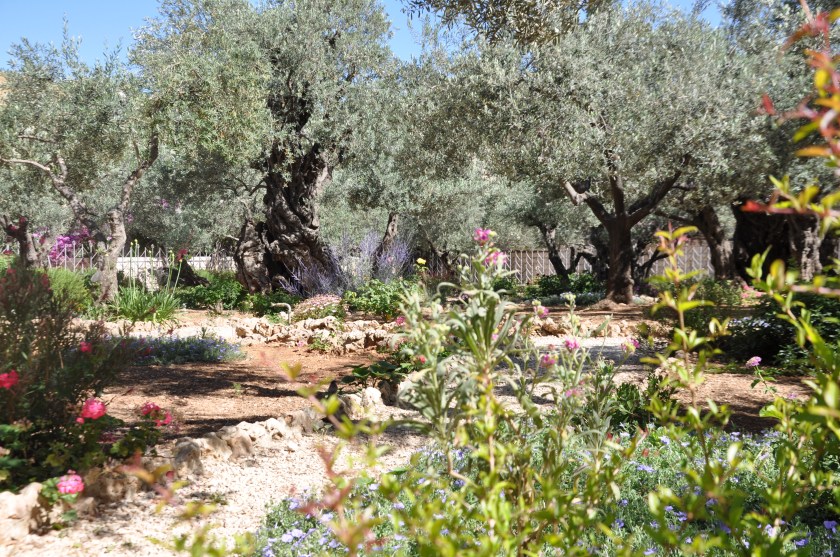
Jesus offers us the same opportunity, at Calvary’s tree. With Him we can bury our failures, our disappointments, our choices that have brought pain and far-reaching consequences, scars that heal but leave marks nevertheless. With Him we can put to rest long-held bitterness, resentment, coveting, unmet longings, sorrows, and worry over situations that cannot change. We can rise and, like those from Jabesh-gilead, boldly and deliberately take what needs to be left behind and put away forever, and head to the tamarisk tree of the cross, and dig. And from there we can rise to newness of life, to all God has for us from now on. (Galatians 2:20; Philippians 3:13-14)
DSC_0504

What attitudes, regretted actions, sin habits burden like dead weight today? Naming these, confessing them, and carrying them to bury once for all under the tamarisk tree of Jesus’s cross will bring freedom and new flourishing. “We were buried therefore with him by baptism into death, in order that, just as Christ was raised from the dead by the glory of the Father, we too might walk in newness of life.” (Romans 6:4)

Lord God, help me identify what You want to put away from me forever. May I boldly come to Your throne of grace and be rid of these once for all. (Psalm 51:2,7; Hebrews 4:16)

 

Handling Loss

Now when David and his men came to [Ziklag], they found it burned with fire, and their wives and sons and daughters taken captive. Then David and the people who were with him raised their voices and wept until they had no more strength to weep. David’s two wives also had been taken captive, Ahinoam of Jezreel and Abigail the widow of Nabal of Carmel. And David was greatly distressed, for the people spoke of stoning him, because all the people were bitter in soul, each for his sons and daughters. But David strengthened himself in the LORD his God… David inquired of the LORD, ‘Shall I pursue after this band? Shall I overtake them?’ He answered him, ‘Pursue, for you shall surely overtake and shall surely rescue.’ So David set out, and… pursued, he and four hundred men. Two hundred stayed behind, who were too exhausted to cross the brook Besor… David struck down [the band of Amalekites] from twilight until the evening of the next day… David recovered all that [they] had taken, and David rescued his two wives. Nothing was missing, whether small or great, sons or daughters, spoil or anything that had been taken. David brought back all… David said, ‘The LORD… has preserved us and given into our hand the band that came against us.'” 1 Samuel 30:3-6,8-10,17-19,23

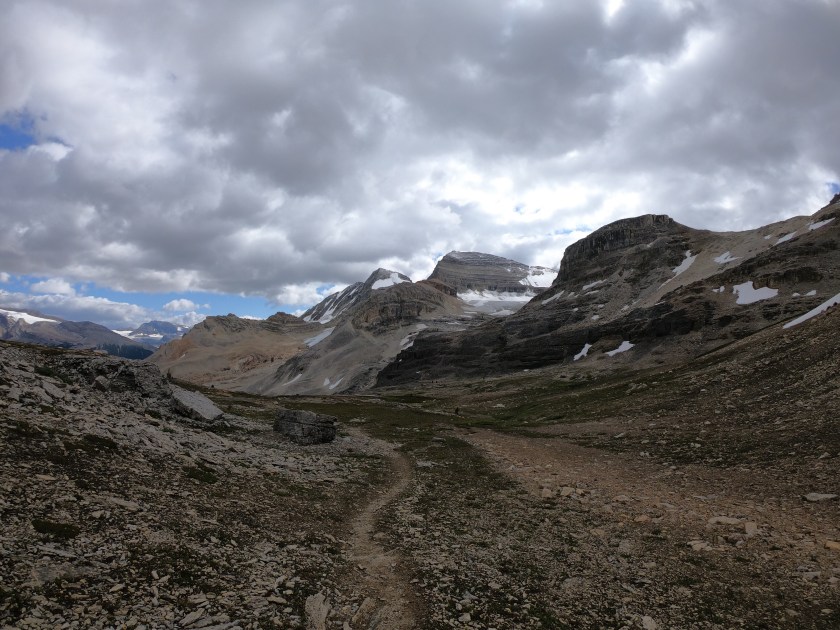
Avoiding King Saul’s pursuit, David was now rejected by the Philistines, and returned to his home in Ziklag, only to find destruction and desolation. The Amalekites had destroyed his city and taken captive his family. He wept, then found himself the brunt of anger and criticism, threatened by his own bitter followers. But what he does next is an example to all who are faced with devastation and loss. He strengthened himself in the LORD, and sought His guidance and help. He turned to the One Who had never failed him. He knew well this One of greatest worth, the Rock Who was his soul’s salvation and kept him from being greatly shaken. (Psalm 62:1-8)

IMG_6790

And God answered. He said to go, he would overtake and rescue. He provided a willing spy-helper, and supernatural energy to fight 24 hours without sleep. He preserved David and led him to recover all that had been taken, and then moved David to distribute goods to all who had stayed behind, and gifts to friends in Judah, making a generous way into the hearts of those over whom he would soon reign.

The Lord answers us too, in our loss, our distress, our devastating news. He understands our tears and holds our prayers as incense. He knows every broken heart and spirit, the sin that devastates lives, the fear that forebodes, the storms that destroy security, property, and hope. While He does not always restore our ‘things,’ or loved ones lost to disease or rebellion, He keeps our life, restores our souls, and promises full life in Him. (Psalm 23:3; 121:5,7; John 10:10; Revelation 5:8; 21:3-4)

To whom do we go? When trouble assails, when flesh and heart fail, when we are tired and stumble, overwhelmed with loss, will we find in Jesus our help, portion, and strength? (Psalm 46:1; 73:25; Isaiah 40:29-31)

Lord, may I ever count all loss as nothing compared to the surpassing joy of knowing You. (Philippians 3:8)

Love Over Puff

“Now concerning food offered to idols: we know that ‘all of us possess knowledge.’ This ‘knowledge’ puffs up, but love builds up. Therefore, as to the eating of food offered to idols, we know that ‘an idol has no real existence,’ and that ‘there is no God but one.’ However, not all possess this knowledge. But some, through former association with idols, eat food as really offered to an idol, and their conscience, being weak, is defiled. Food will not commend us to God. We are no worse off if we do not eat, and no better off if we do. But take care that this right of yours does not somehow become a stumbling block to the weak. For if anyone sees you who have knowledge eating in an idol’s temple, will he not be encouraged, if his conscience is weak, to eat food offered to idols? And so by your knowledge this weak person is destroyed, the brother for whom Christ died. Thus, sinning against your brothers and wounding their conscience when it is weak, you sin against Christ. Therefore, if food makes my brother stumble, I will never eat meat, lest I make my brother stumble.” “Love is patient and kind; love does not envy or boast; it is not arrogant.” 1 Corinthians 8:1,4,7-13; 13:4

None of us lives to himself, and none of us dies to himself.” Romans 14:7

There is much freedom in the Christian life, but our overarching freedom has been granted so we will love and serve one another, not ourselves. Too often, we abuse our liberty with a puff of arrogance, an air of independence, bolstered by our knowledge of God’s grace to us. Clinging to our personal rights, we indulge self while disregarding or judging others for whom Jesus has also died. We can abuse or wave our ‘all things are lawful’ banner, but fail to put our glorious freedom into practice for the good of others. While I may say I’m willing to relinquish my privileges, only a pure, selfless love for Christ and others will compel me to actually do so. When Jesus sets us free from self-promotion and -obsession, He redeems our affections and changes our priorities and what we treasure. (1 Corinthians 10:23; 2 Corinthians 5:17)

DSC_1208

Are we more prone to spending thought, time, and resources on our own pleasure, perhaps holding back a portion for God, or do we take thoughtful moments, waiting on God, to consider how He would have us behave, give, serve, spur one another on to love and good deeds? Do I make excuses to justify my selfish expenditures, or hold loosely all God has entrusted to me, seeking His leading in stewardship? How willing am I to give up my rights for the sake of another who is less knowledgable in the faith, who may misconstrue my exercise of freedom as a license to indulge in an area that to him causes stumbling and a guilty conscience? Do my actions give evidence that I care more about myself or the faith and good of others? (Galatians 5:13; Hebrews 10:24)

Lord on High, remove any spiritual puffery from my heart, and infuse me with genuine love that manifests itself in selfless, lavish living for others’ sake.

Who We Believe, What We Do

Then Saul said, ‘I have sinned. Return, my son David, for I will no more do you harm, because my life was precious in your eyes this day. Behold, I have acted foolishly, and have made a great mistake.’ And David answered and said,.. The Lord rewards every man for his righteousness and his faithfulness, for the Lord gave you into my hand today, and I would not put out my hand against the Lord‘s anointed.  Behold, as your life was precious this day in my sight, so may my life be precious in the sight of the Lord, and may he deliver me out of all tribulation.’ Then Saul said to David, ‘Blessed be you, my son David! You will do many things and will succeed in them.’ So David went his way, and Saul returned to his place. Then David said in his heart, ‘Now I shall perish one day by the hand of Saul. I should escape to the land of the Philistines… out of [Saul’s] hand.’ So David arose and went over… to Achish, king of Gath.” 1 Samuel 26:21-27:2

Saul pledged to David once more he would not harm him, but David had learned that Saul’s words, spoken in regret, were without conviction. He had every reason not to believe Saul, but no reason not to believe his God, Who had promised him the kingdom and faithfully delivered him time and again. The reality of Saul’s repeated attempts to murder him compelled him to take refuge for the mean time away from the king’s jealous eye, fighting for the Philistines. Fueled by faith in God’s word and protection, David chose to preserve his life for the future He had foretold. (1 Samuel 16:1,3,12-13; 20:30-31; 24:16-21; Psalm 52; 54; 56; 57; 59)

qU0S4C4MTgKhMiFhq2FXHA

We decide all the time who we believe, from weather forecasters to journalists to leaders in many disciplines, and what we believe drives what we do. We accept or reject what others say according to their credentials, and to our own opinions, preconceptions, and preferences, and act accordingly. Our challenge is to know what is true and who to believe. While we do not hear God speaking audibly today, we do have the completed scriptures, and we can test what is written or spoken today by the standard of inerrant biblical truth.

Are there ideas I want to believe, and so look for affirmation only from those who would agree with me? Do I make decisions based on feeling and desire rather than truth? Am I careful to consider the character and trustworthiness of those whose advice I seek and implement? Our gracious God promises to give wisdom and insight when we seek him. Often this is through someone else, so it is important to confirm what we hear with God’s voice in Scripture and the Spirit’s peace in directing us. (Psalm 32:8; John 16:13; James 1:5)

Lord, guard me from listening to and heeding only what I want to hear. May I ever put my trust in You, Whose word I praise. May I walk before You in the light of life in every decision, no matter where You lead me. (Psalm 56:3-4,13)

“No Matter What, Speak.”

He said to me, ‘Son of man, stand on your feet, and I will speak with you.’ And as he spoke to me, the Spirit entered into me and set me on my feet, and I heard him speaking to me. And he said to me, ‘Son of man, I send you to the people of Israel, to nations of rebels, who have rebelled against me. They and their fathers have transgressed against me to this very day. The descendants also are impudent and stubborn: I send you to them, and you shall say to them, “Thus says the Lord God.” And whether they hear or refuse to hear (for they are a rebellious house) they will know that a prophet has been among them. And you, son of man, be not afraid of them, nor be afraid of their words… Be not afraid of their words, nor be dismayed at their looks, for they are a rebellious house. And you shall speak my words to them, whether they hear or refuse to hear, for they are a rebellious house. But you, son of man, hear what I say to you.'” Ezekiel 2:1-8

I remember well a moment when I was young, a classmate diagrammed a sentence on the board and our strict grammar teacher asked whether it was correct. All others in the class raised their hands, and I was torn between going along with them, or holding my hand down because the example was not correct. I chose, with trepidation, to align with the standard instead of the crowd. I know how Ezekiel felt!

l+y%Fu4ZRl+vtICf3LqoaA

It is not easy to head into a storm of naysayers, criticism, or rejection. God prepared Ezekiel that his message to stubborn and rebellious Israel would be met by taunting words and rolling eyes, that they would likely refuse his warning, but he was to go and speak no matter what. He gave His words and His Spirit. Ezekiel was not to fear or be dismayed. His audience was God Himself; it was He to Whom he should listen, and to Whom would answer.

In a world of caustic opprobrium, where biblical truth is often distorted and declared outrageous, and slips of the tongue or behavior are immediately magnified under the public’s microscope, we might be tempted to shrink from doing what the Lord requires. Our Almighty says, follow Me anyway. Whether it is to rise up and speak, or stay seated and hold our tongue, we must weigh our decisions by His word, not the pressures of man or the fickle standards of our culture. To know what He would have us do or say takes a ‘standing up,’ out of the fray of popular opinion, away from the cacophony of what-ifs, above fear and intimidation, to hear what God would say to us. Then in His Spirit we must go.

What defines my sense of duty? What forces influence my life message or sway my resolve? Am I giving evidence, by the decisions I make, that I fear man more than God?

Lord, may I stand above the world’s noise and listen to You. Embolden me with Your Spirit to do and be and say all according to Your holy word.


Safe in the Strongholds

“And David remained in the strongholds in the wilderness, in the hill country of the wilderness of Ziph. And Saul sought him every day, but God did not give him into his hand. David saw that Saul had come out to seek his life. David was in the wilderness of Ziph at Horesh… Now David and his men were in the wilderness of Maon, in the Arabah to the south of Jeshimon. And Saul and his men went to seek him. And David was told, so he went down to the rock and lived in the wilderness of Maon. And when Saul heard that, he pursued after David in the wilderness of Maon. Saul went on one side of the mountain, and David and his men on the other side of the mountain. And David was hurrying to get away from Saul. As Saul and his men were closing in on David and his men to capture them, a messenger came to Saul, saying, ‘Hurry and come, for the Philistines have made a raid against the land.’ So Saul returned from pursuing after David and went against the Philistines. Therefore that place was called the Rock of Escape. And David went up from there and lived in the strongholds of Engedi.” “The Lord is my rock and my fortress and my deliverer, my God, my rock, in whom I take refuge, my shield, and the horn of my salvation, my stronghold and my refuge, my savior.” 1 Samuel 23:14-15,24-29; 2 Samuel 22:2-3 

The strongholds of our God are a welcome respite in any wilderness. David, having been anointed king but not yet ascended to the throne, was hotly pursued by the still-reigning, rejected King Saul. In addition to his physical enemies, he faced doubt, fear, exhaustion. We can infer that his strongholds in this harsh land were more than hiding places in the rock; his habit was to hide in his Rock and salvation, the LORD.

IMG_9416

Are there nasty foes that lurk and pester us to doubt the love and grace of God, His forgiveness of our sins and remembering them no more? Do fears of the unknown, of hypothetical failures, tragedy, defeat, or the worst for loved ones, occupy our thoughts? Does anxiety over impending storms or health or other situations over which we have no control, constantly assail? Would I find God’s stronghold and remain there? No matter what buffets our imaginings, He is nigh, His presence strong, His promises real. David was keenly aware of his enemies and did skillful battle with them, but he set up residence and remained in his Fortress, His Savior. (Isaiah 43:25; Hebrews 8:12)

Abiding in our Stronghold enables us to hold strong. When all things disturbing attack our minds, bodies, souls, we can live safely in Jesus Who delivers from eternal peril and guards against present worry.

The Lord is the stronghold of my life; of whom shall I be afraid?” Psalm 27:1

LORD, You are good, my stronghold every day. May I ever hide myself in Thee. (Nahum 1:7)

“What Have You Done?”

“‘Then go down before me to Gilgal. And behold, I am coming down to you to offer burnt offerings and to sacrifice peace offerings. Seven days you shall wait, until I come to you and show you what you shall do…’ He waited seven days, the time appointed by Samuel. But Samuel did not come to Gilgal, and the people were scattering from him. So Saul said, ‘Bring the burnt offering here to me, and the peace offerings.’ And he offered the burnt offering. As soon as he had finished offering the burnt offering, behold, Samuel came. And Saul went out to meet him and greet him. Samuel said, ‘What have you done?’ And Saul said, ‘When I saw that the people were scattering from me, and that you did not come within the days appointed, and that the Philistines had mustered at Michmash, I said, “Now the Philistines will come down against me at Gilgal, and I have not sought the favor of the Lord.” So I forced myself, and offered the burnt offering.’ And Samuel said to Saul, ‘You have done foolishly. You have not kept the command of the Lord your God, with which he commanded you. For then the Lord would have established your kingdom over Israel forever.'” 1 Samuel 10:8; 13:8-13

God knows our frail flesh, and in merciful wisdom invites us to be redeemed– to recognize our need for Him. From the Garden of Eden, He has Himself, or by others, sought out His own, giving opportunity to acknowledge our choices against His ways, to ‘come clean’ from our excuses, be restored, and set on an upright path. His method is a gracious gift for us personally, a model for us to weigh our motives, decision-making, planning, actions. (Genesis 3:8-13; 4:9-10; Exodus 32:21; Psalm 103:8-14)

DSC_0384

Oh heart, what have you allowed to capture your affection? Where do you wander in time of idleness, where do you drive expenditures of time and resources? Whom do you first love, and where has your love strayed to foreigners?

Oh mind, on whose agenda are you fixed? What is informing your decision-making– selfish desires or God’s wisdom? Are your choices self-driven, resentment-motivated, prejudice-laden, impatience-pushed, or carefully and humbly aligned with the Lord’s?

Oh soul, what are your priorities this day? Where is your anchor held, and what causes you to shift from the Solid Rock to shifting sands? When you are weary, where do you find rest? Whom are you worshiping?

Oh eyes, what has captivated your attention? Are you transfixed on twinkly costume bling instead of eternal jewels? On man’s measure of importance over God’s assessment of value? Do you judge according to the outside instead of the inside? Are the larger and better and newer of this world distracting you from what lasts forever? (1 Samuel 16:7)

Oh hands and feet, where are you going today? Are you busy about the urgent and empty, or well-planned to carry out God’s will? Are you investing in yourself or in Him, your goals or His kingdom? Where will you serve, provide help, comfort, and encouragement in His Body today?

Father, probe my depths, and purify my honest answers. May I daily venture forth filled with Your Spirit, doing Your good pleasure. (Galatians 5:22-23; Ephesians 5:18)

Behold, Be Up, Be On!

Now after the Sabbath, toward the dawn of the first day of the week, Mary Magdalene and the other Mary went to see the tomb. And behold, there was a great earthquake, for an angel of the Lord descended from heaven and came and rolled back the stone and sat on it… The angel said to the women, ‘Do not be afraid, for I know that you seek Jesus who was crucified. He is not here, for he has risen, as he said. Come, see the place where he lay. Then go quickly and tell his disciples that he has risen from the dead, and behold, he is going before you to Galilee; there you will see him. See, I have told you.’ So they departed quickly from the tomb with fear and great joy, and ran to tell his disciples. And behold, Jesus met them and said, ‘Greetings!’ And they came up and took hold of his feet and worshiped him. Then Jesus said to them, ‘Do not be afraid; go and tell my brothers to go to Galilee, and there they will see me.’ Now the eleven disciples went to Galilee, to the mountain to which Jesus had directed them.  And when they saw him they worshiped him. And Jesus came and said to them,.. ‘Go therefore and make disciples of all nations, baptizing them in the name of the Father and of the Son and of the Holy Spirit, teaching them to observe all that I have commanded you. I am with you always, to the end of the age.'” Matthew 28:1-2,5-10,16-17,18-20

After Jesus’s crucifixion and burial, the women were compelled to be near Him, but found an empty tomb. The cross had changed everything, and would forever alter, and redirect, their life path. When the angel appeared, startling their overwhelming emotions with the truth that their Teacher-Savior was alive, he told them to look at the place He had been, then “Go!” They went, and fast, and met Jesus and worshiped Him, Who then also told them to “Go!” When the disciples saw the resurrected Lord, they too worshiped, and He told them to “Go!”

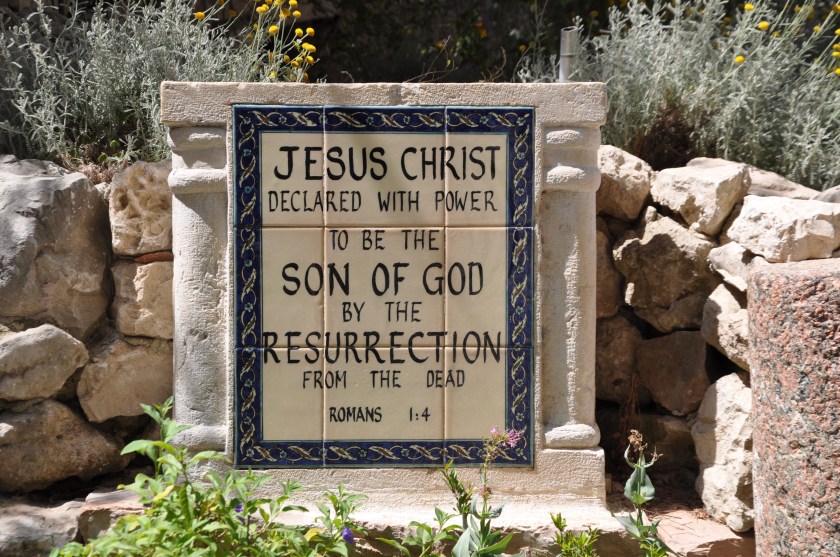
Resurrected Jesus plaque, Jerusalem

It is good and right to seek and to adore Jesus, to behold Him in His glory and worship Him alive in resurrection power, but He commands that we then take the joy of being in His presence, and “Go!” Worship fuels our witness. When once filled with the wonder of His life and beauty and love, our fear is replaced with zeal, our confusion with clarity, and we are equipped to take the message of His victory over death and His gift of salvation to a needy world. He Who is declared risen and alive is with us always, guiding our steps and empowering our testimony as we tell and train others to follow Him.

Lord, keep my heart in wonder at Your empty tomb, even as my feet go abroad and my mouth speaks Your truth. May Your resurrection power make effectual Your word, and bring many to know and marvel at You.


The Practice of Pause

“When he mustered them at Bezek, the people of Israel were three hundred thousand, and the men of Judah thirty thousand… And the next day Saul put the people in three companies. And they came into the midst of the camp in the morning watch and struck down the Ammonites until the heat of the day. And those who survived were scattered, so that no two of them were left together… Saul said, ‘Not a man shall be put to death this day, for today the Lord has worked salvation in Israel.’ Then Samuel said to the people, ‘Come, let us go to Gilgal and there renew the kingdom.’ So all the people went to Gilgal, and there they made Saul king before the Lord in Gilgal. There they sacrificed peace offerings before the Lord, and there Saul and all the men of Israel rejoiced greatly.” 1 Samuel 11:8,11,13-15

All in a day’s work. The newly-anointed King Saul was confronted with Ammonites who would agree to a treaty only on the condition that they gouge out all Israel’s right eyes. Ouch. By God’s Spirit, Saul strategized, prepared, and led the people, over hours as the sun blazed hot, and with much bloodshed, to a remarkable victory. But the day was not done. Immediately, taking no selfish credit, and no bitter revenge on nay-sayers, he directed God’s people to keep moving, however weary, south to Gilgal to renew their covenant and offer sacrifices to the LORD Who had given the triumph. Here, early in his reign, his kingly priority was to pause and rejoice.

Peaceful Gulf behind sea grapes

Is this my practice? When I have triumphed over temptation, or impatience, or despair, do I turn my thoughts to my Deliverer and give thanks? Upon completing a large or weighty task, do I simply rest, or renew myself in God? In the heat of my days, in the midst of challenges with health or finances or personalities or hurtful choices of those for whom I am responsible, do I pause, set my thoughts aright, and praise? In weariness, during a long obedience, will I take time to stop, breathe, and offer myself once again to the Lord of my everything?

There is great benefit to practicing pause before the LORD, and it is always good to give thanks and renew our commitment, our love, our allegiance to Him. When we keep coming back to plumb, when we realign our straying affections or pride to be fixed on Him, we more readily stay in the flow of His will.

“Take time to be holy, let Him be thy Guide;
And run not before Him, whatever betide.
In joy or in sorrow, still follow the Lord,
And, looking to Jesus, still trust in His Word.

Take time to be holy, be calm in thy soul,
Each thought and each motive beneath His control.
By looking to Jesus, like Him thou shalt be;
Thy friends in thy conduct His likeness shall see.”  ~William Longstaff (1882)

Good Master, keep my stride in step with Yours. May I often pause to remember You, to offer myself anew, to give You the honor due Your glorious name. (Psalm 96:3,6-9)


The Mercy of Misery

The joy of our hearts has ceased; our dancing has been turned to mourning.
The crown has fallen from our head; woe to us, for we have sinned!
For this our heart has become sick, for these things our eyes have grown dim…
But you, O Lord, reign forever; your throne endures to all generations…
Restore us to yourself, O Lord, that we may be restored!” Lamentations 5:15-17,19,21

For when I kept silent, my bones wasted away through my groaning all day long.
For day and night your hand was heavy upon me; my strength was dried up as by the heat of summer. I acknowledged my sin to you, and I did not cover my iniquity; I said, ‘I will confess my transgressions to the Lord,’ and you forgave the iniquity of my sin.” “God’s kindness is meant to lead you to repentance.”
 Psalm 32:3-5; Romans 2:4

Many times through Israel’s history, God Almighty allowed them to experience misery, inflicted by enemies, brought on by natural phenomena or physical suffering, to lead them to recognize their rebellion, their idolatry, their desperate need for His mercy. And time and again, He lavished that mercy on them in ways that they could see only He had brought the deliverance. As we see this repeated in scripture, so in our lives. Mercy, by its very nature, is poured out over and over to an undeserving people who have a hard time learning its lesson once for all.

DSC_0458

While misery– of guilt, anger, broken communion, conflict, exile– comes about for a variety of reasons, we must always look to see where we might be culpable. Is it a mercy in God’s hands intended to uncover, to convict, to cleanse, to bring about reconciliation between individuals or factions? If so, what is my part? If God indeed reigns forever, He has some purpose, and instead of pointing blame, or sitting in judgment on another’s motives, the Lord is pleased when we try the heart, when we open ourselves for His searching and purifying fire. How beautiful the simple words of David and Nathan, “‘I have sinned against the Lord.’ ‘The Lord also has put away your sin.'” (2 Samuel 12:13; Psalm 139:23-24)

“Come, Thou Fount of every blessing
Tune my heart to sing Thy grace
Streams of mercy, never ceasing
Call for songs of loudest praise
Teach me some melodious sonnet
Sung by flaming tongues above
Praise the mount, I’m fixed upon it
Mount of Thy redeeming love.

O to grace how great a debtor
Daily I’m constrained to be!
Let that grace, Lord, like a fetter,
Bind my wand’ring heart to Thee.
Prone to wander, Lord, I feel it;
Prone to leave the God I love:
Take my heart, oh, take and seal it
With Thy Spirit from above.” 

~Robert Robinson (1735-1790)

Would I remove the martyr mindset, confess my part in misery’s cause, and take the high ground to see things as God does, accepting and yielding to His purpose? It is on these heights my soul can sing.

Father, thank You for Your kind afflictions that show me Your fathomless love and mercy. May I gratefully submit to Your rule over all things, and ever sing Your praises, that Your mercy is magnified.